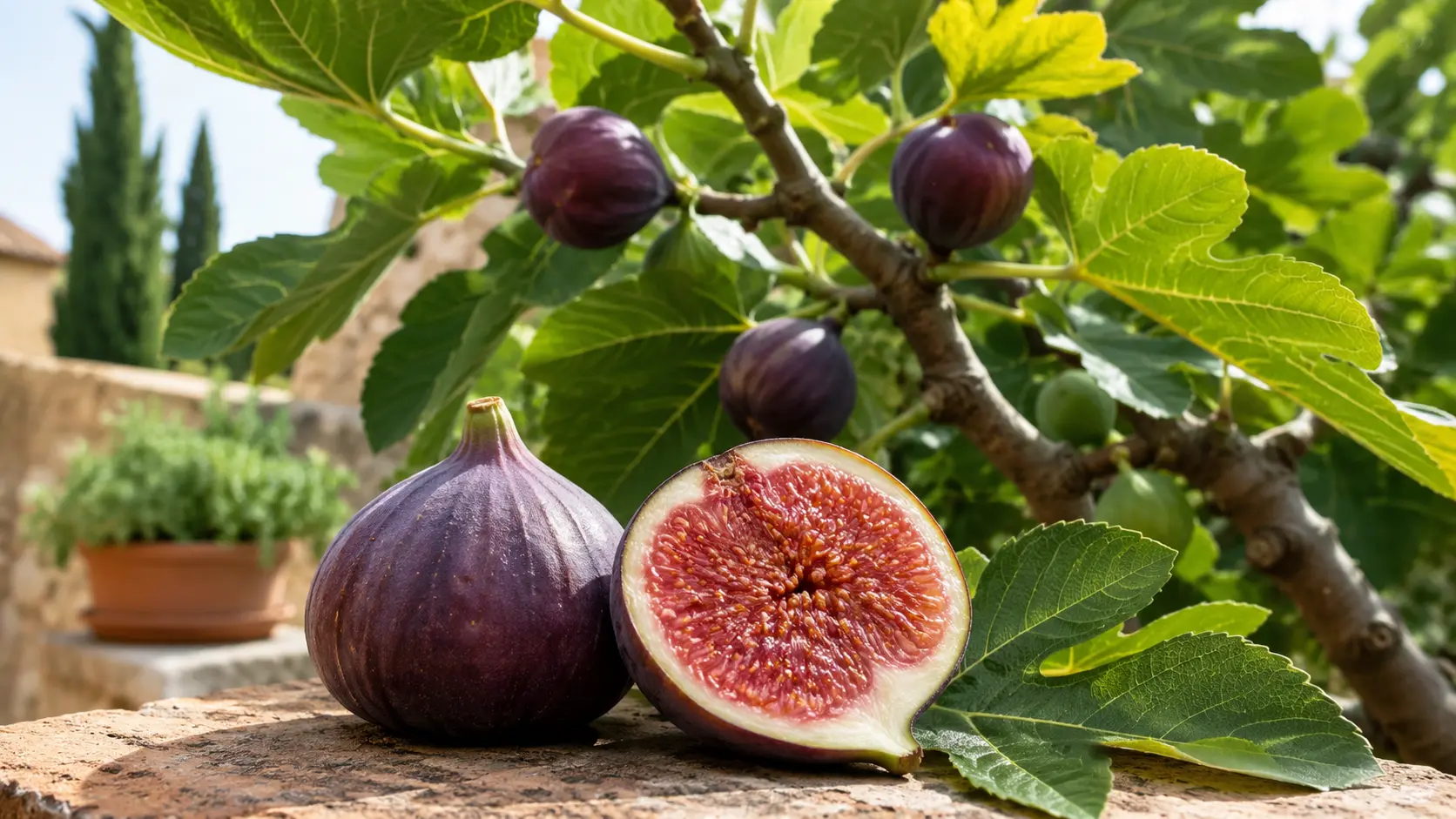
Fig trees have a way of turning ordinary gardens into something truly special, with their sculptural branches and generous harvests of honey-sweet fruit.
Yet many gardeners wonder why their trees seem stuck in slow motion or produce disappointing crops.
The answer lies beneath the surface, in how we nourish these Mediterranean beauties during their growing season. Getting fertilization right turns a surviving fig tree into one that thrives with energy and fruit.
Too little feeding leaves your tree struggling, while overdoing it creates lush foliage at the expense of those delicious fruits you’re really after.
What follows walks you through everything you need to know about fertilizer for fig trees, helping you create the perfect feeding routine for strong growth and bountiful harvests.
Do Fig Trees Need Fertilizer?
Fig trees are surprisingly resilient plants that can grow in less-than-perfect soil, but that doesn’t mean they’ll reach their full potential without help.
In their native Mediterranean habitat, these trees thrive in rocky, lean ground, yet they still benefit from seasonal nutrient boosts during active growth.
Your fig tree’s need for fertilizer depends largely on soil quality and the tree’s performance. Pale or yellowing leaves, weak new growth, and small or sparse fruit are telltale signs your tree is hungry.
Container-grown figs especially need regular feeding since nutrients wash away with each watering.
One common myth suggests figs prefer neglect, but moderate, balanced fertilization actually encourages both healthy foliage and better fruit production when timed correctly.
Best Fertilizer for Fig Trees
Fig trees aren’t particularly fussy eaters, but they do have preferences when it comes to their nutritional menu.
Understanding what feeds your tree best helps you choose between the many options lining garden center shelves.
Understanding NPK and Fertilizer Types
The ideal fertilizer for fig trees features a balanced NPK ratio around 8-8-8 or 10-10-10, providing equal parts nitrogen for foliage, phosphorus for root development, and potassium for fruit quality.
Some growers prefer slightly lower nitrogen formulas like 5-5-2 to prevent excessive leafy growth at the expense of fruit.
Slow-release granular fertilizers work beautifully for in-ground trees, feeding steadily over months, while liquid fertilizers give container figs the quick nutrition they need.
Best Organic Fertilizers for Fig Trees
Organic options bring more than just nutrients to your fig tree. They build healthier soil and support beneficial microbes that help roots absorb what they need.
| Fertilizer Type | Key Benefits | How to Apply |
|---|---|---|
| Compost and aged manure | Improves soil structure, slow nutrient release | Work into the soil in early spring; must be well-aged |
| Fish emulsion | Fast-acting nitrogen for foliage growth | Dilute and apply every 2-3 weeks during the growing season |
| Blood meal and bone meal | Blood meal for nitrogen; bone meal for phosphorus | Mix into soil at planting or top-dress in spring |
| Worm castings | Gentle nutrition with beneficial microbes | Apply as top dressing or brew into tea |
| Down to Earth Organic Fruit Tree Fertilizer | Balanced 6-2-4 formula with added calcium | Apply in early spring and mid-summer |
| Dr. Earth Organic Fruit Tree Fertilizer | Contains probiotics and mycorrhizae | Water in after application for best results |
Best Commercial Fertilizers for Fig Trees
Commercial fertilizers offer convenience and precision, delivering exactly what your fig tree needs without guesswork.
| Fertilizer Type | Best For | Why Choose It |
|---|---|---|
| Jobe’s Organics Fruit & Citrus Fertilizer Spikes | Container and small trees | Pre-measured spikes release nutrients slowly |
| Espoma Citrus-tone | Organic slow-release feeding | 5-2-6 formula promotes fruiting over foliage |
| Miracle-Gro Fruit & Citrus Plant Food Spikes | Quick, convenient feeding | Continuous feeding for up to 2 months |
| Osmocote Smart-Release Plant Food | Low-maintenance care | Feeds for up to 6 months with one application |
Fig Tree Fertilizer by Growth Stage
Your fig tree’s appetite changes as it matures, much like how a teenager needs different nutrition than a toddler.
Matching your fertilization strategy to your tree’s life stage ensures you’re supporting exactly what it needs most, whether that’s building a strong foundation or channeling energy into fruit production.
Young Fig Trees
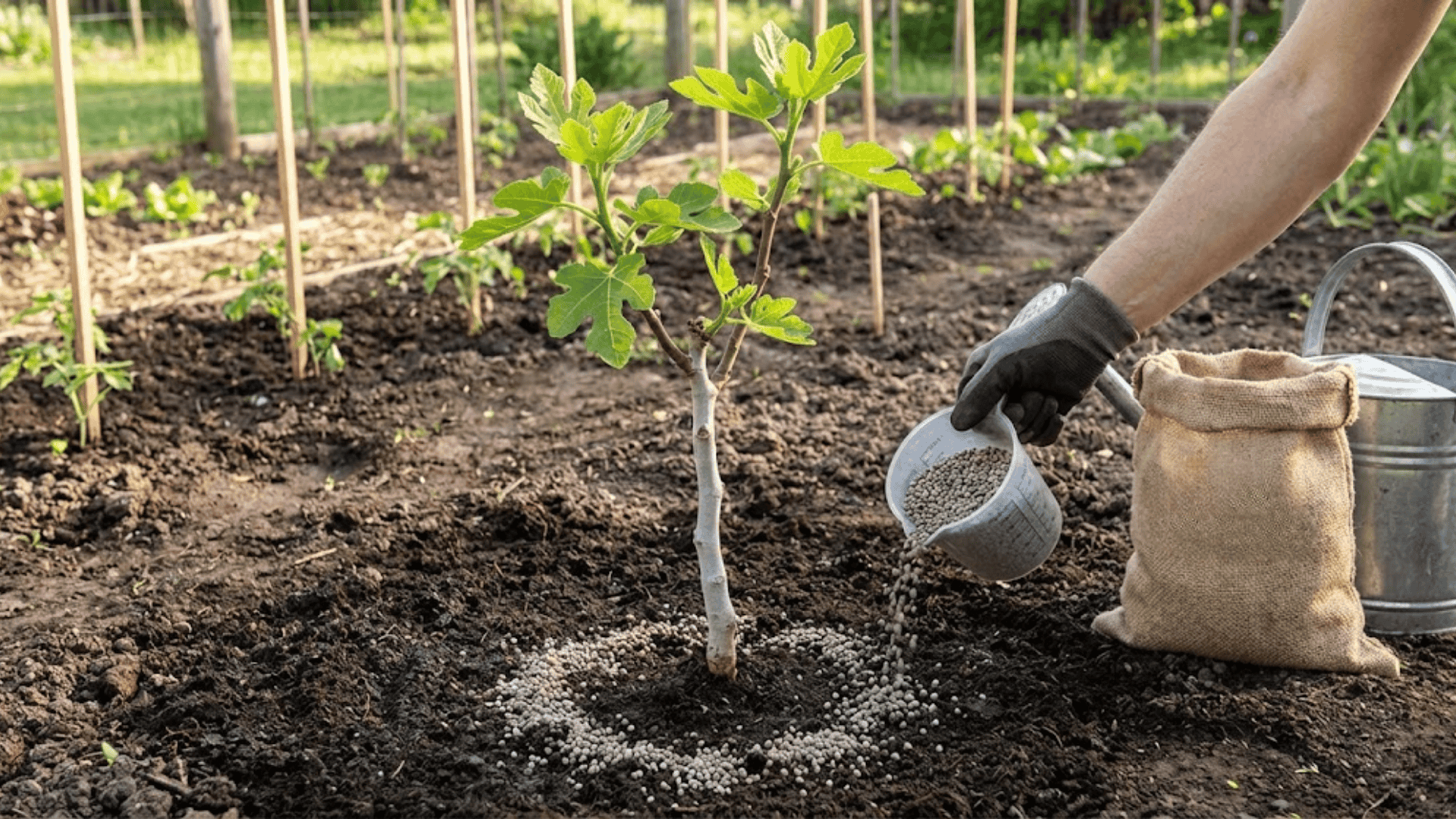
Timeline: Years 1-3
Young figs focus on establishing deep roots and strong framework branches. Feed with balanced 8-8-8 or 10-10-10 fertilizer at half strength every 4-6 weeks during the growing season.
Avoid high-nitrogen formulas that create leggy growth and delay fruiting. The goal is steady, controlled development rather than rapid spurts. Water deeply after each application to help nutrients reach roots without burning them.
Mature Fig Trees
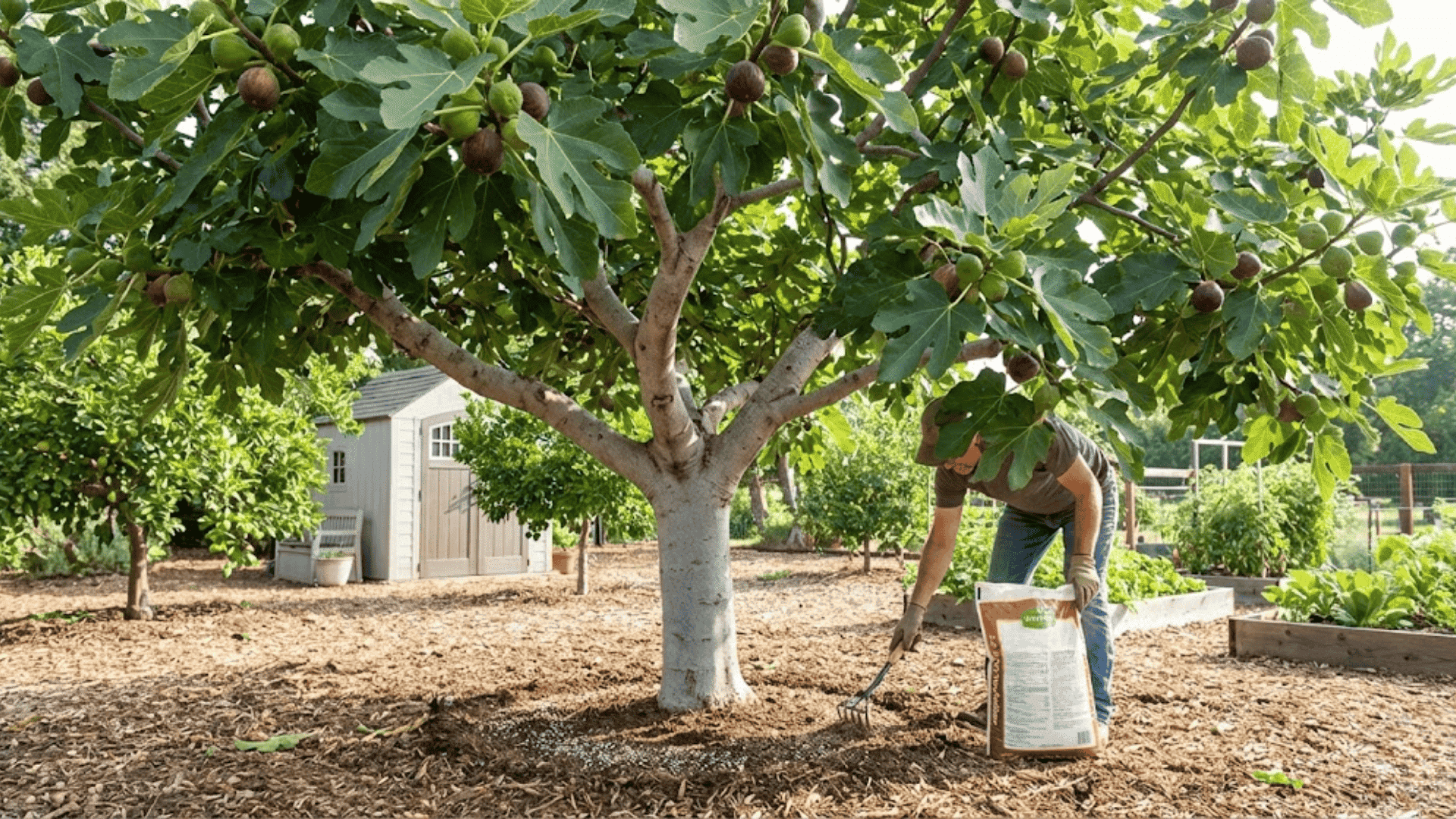
Timeline: Year 4 onwards
Mature figs shift their energy toward fruit production. Feed in early spring as buds swell, using a lower-nitrogen formula like 5-5-2 or 6-2-4 that favors fruiting. Apply a second feeding in early summer after the first fruits develop.
Most established in-ground trees thrive on just these two annual applications, though heavy producers showing pale leaves may benefit from a light midsummer boost.
Container-Grown Fig Trees
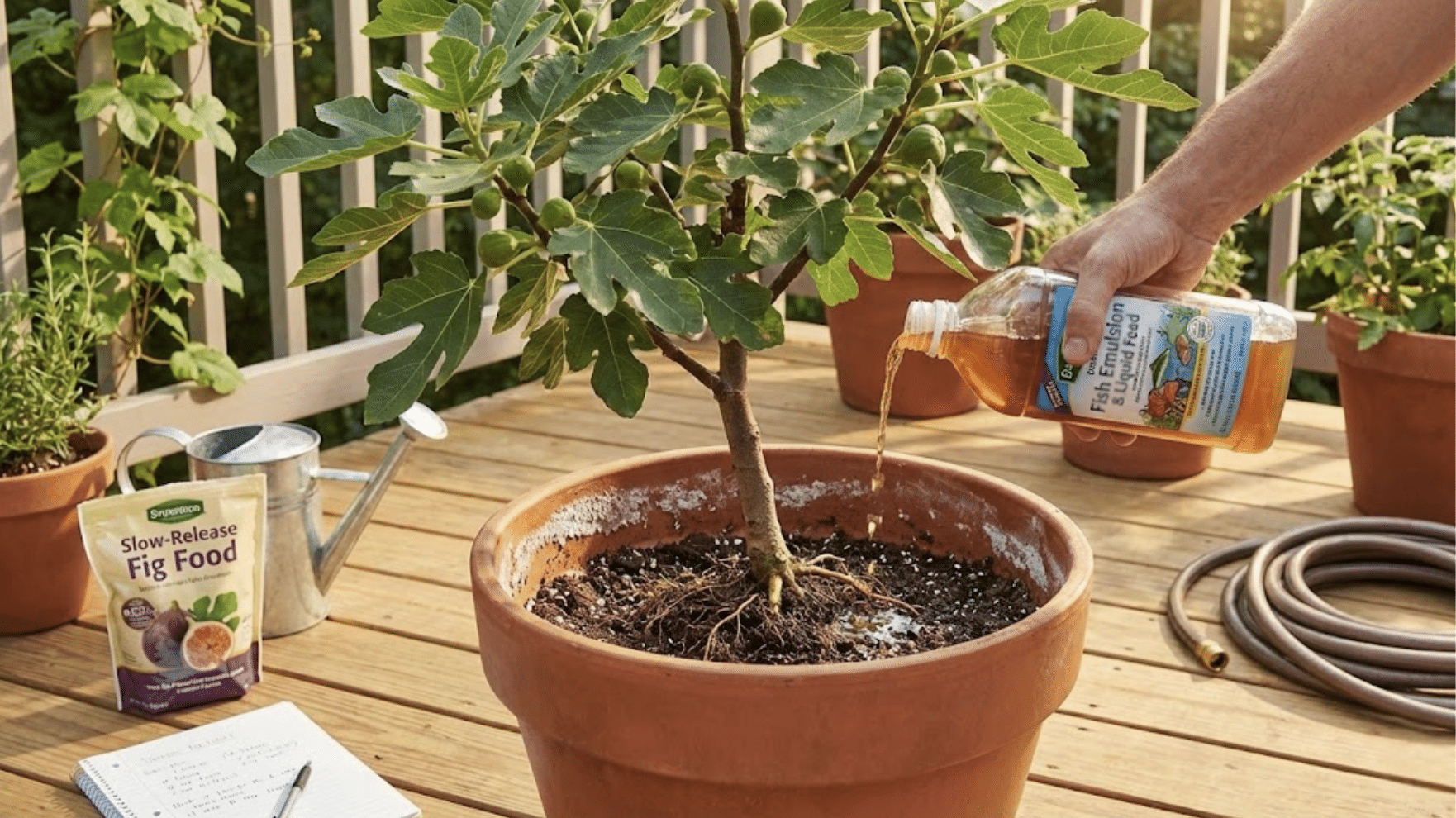
Timeline: All ages, special care required
Potted figs need more frequent feeding since nutrients wash away with every watering. Feed every 2-3 weeks with half-strength liquid fertilizer or refresh slow-release granules monthly.
Watch for white crusty buildup on soil, signaling salt accumulation. Flush containers with plain water every 4-6 weeks to prevent salt damage, and favor organic options like fish emulsion that leave minimal residue.
When to Fertilize Fig Trees?
Timing matters just as much as what you feed your fig tree.
Applying fertilizer at the right moments in your tree’s annual cycle maximizes fruit production and healthy growth, while mistimed feeding can actually work against you.
Seasonal Fertilization Schedule
Getting your timing right means syncing with your fig tree’s natural growth rhythms rather than following a rigid calendar.
Spring through summer is when figs actively grow and set fruit, making this the prime feeding window.
| Season | Timing | Purpose |
|---|---|---|
| Early Spring | As buds swell (March-April) | Kickstart new growth and leaf development |
| Late Spring | After the first growth flush (May-June) | Support fruit development |
| Midsummer | Optional (July) | Sustain heavy producers only |
| Late Summer onward | Stop by in August | Allow the wood to harden for winter |
When to Stop Fertilizing?
Cease all feeding by late summer, typically August, regardless of how vigorous your tree appears.
Fertilizing into fall pushes tender new growth that won’t survive the first frost, potentially damaging entire branches.
Container figs heading indoors need their final feeding 4-6 weeks before the move to transition properly into dormancy.
How to Fertilize Fig Trees Correctly?
Applying fertilizer correctly makes all the difference between nourishing your fig tree and potentially harming it.
Following these straightforward steps ensures nutrients reach the roots safely and effectively.
- Step 1: Measure the proper amount based on your tree size (typically 1 cup per inch of trunk diameter for granular fertilizers, or follow package instructions for liquid formulas).
- Step 2: Apply fertilizer in a circle around the tree’s drip line, staying at least 6-12 inches away from the trunk to avoid burning the bark and crown.
- Step 3: Gently work granular fertilizer into the top 2-3 inches of soil using a hand rake or cultivator, being careful not to damage shallow feeder roots.
- Step 4: Water deeply and thoroughly after application to activate the fertilizer and carry nutrients down to the root zone.
- Step 5: Monitor your tree’s response over the following weeks, watching for signs of improved vigor or any indication you’ve overfed.
The drip line marks where your tree’s feeder roots are most active, making it the ideal feeding zone rather than right at the base, where older woody roots dominate.
Fertilizing Fig Trees in Different Climates
Your local climate dramatically shapes when and how you should feed your fig tree.
In cold climates with short growing seasons, feed only in spring and early summer, stopping by July to let branches harden off before frost.
Mediterranean and warm-climate gardeners enjoy longer feeding windows, often extending into late summer since frost isn’t a concern.
Tropical regions with year-round growth may need lighter, more frequent applications.
Always sync your final feeding with your area’s first frost date, counting back 6-8 weeks to give your tree time to prepare for dormancy or, in frost-free zones, to maintain steady growth without overwhelming the tree.
Signs of Over-Fertilizing Fig Trees
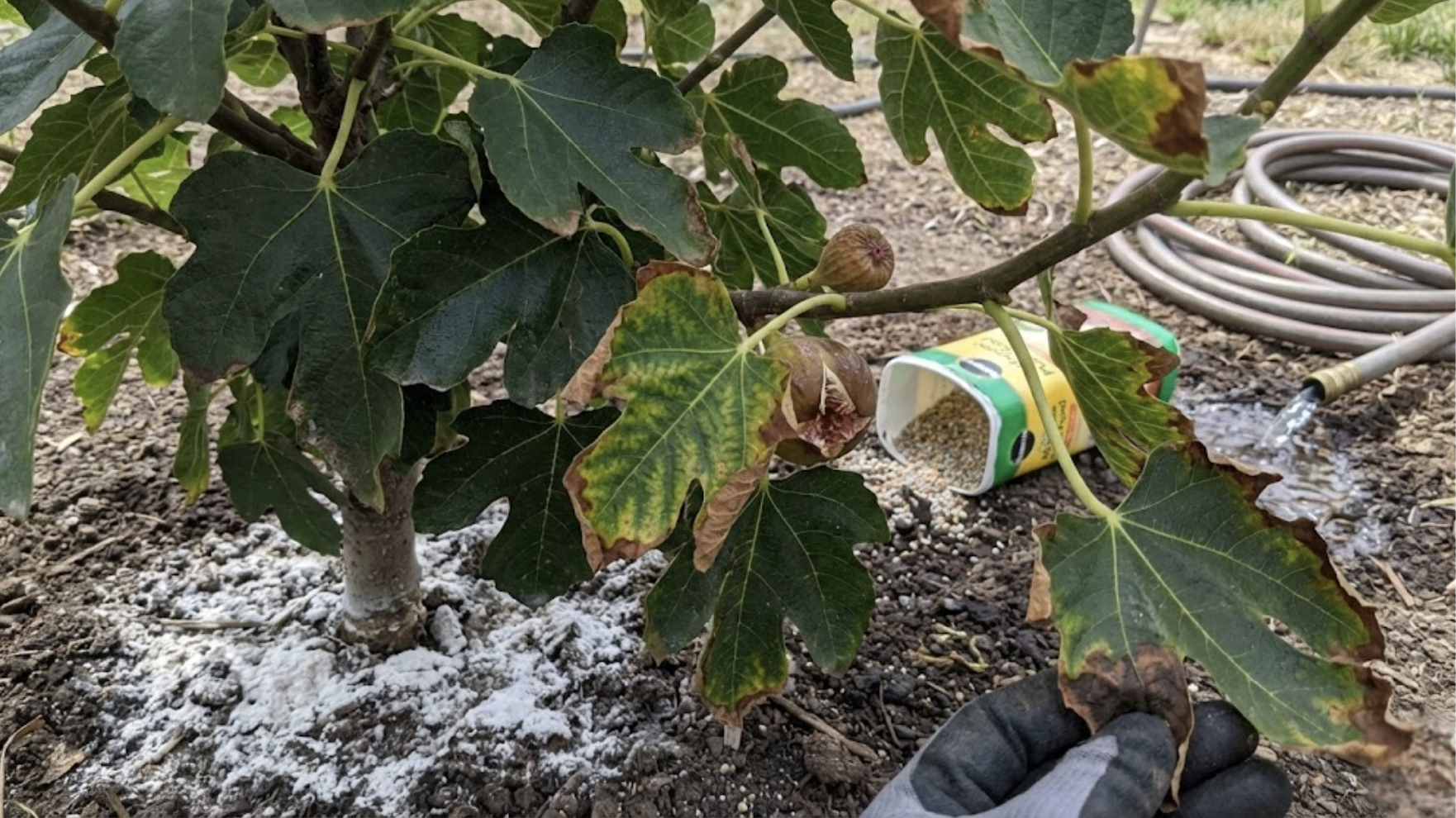
Too much of a good thing becomes a problem when it comes to fertilizing figs. Recognizing the warning signs early helps you correct course before serious damage occurs.
- Lush, Dark Green Foliage with Few or No Fruits: Your tree is channeling all its energy into leaves instead of fruit production, a telltale sign of nitrogen overload.
- Brown, Crispy Leaf Edges or Yellowing Between Veins: Salt buildup from excess fertilizer is literally burning the leaf tissue from the inside out.
- Small, Bland-Tasting Fruit or Fruit that Splits Prematurely: Over-fertilization compromises fruit quality, leading to a watery texture and diminished sweetness.
- White Crusty Deposits on the Soil Surface or Stunted Growth: Accumulated salts are creating a hostile root environment, preventing proper nutrient and water uptake.
If you’ve overfed your tree, flush the soil thoroughly with plain water several times over a few days to leach excess salts. Skip fertilizing for the rest of the season and resume with reduced amounts next year.
Common Fertilizer Problems and Solutions
Even with the best intentions, fertilizing problems can crop up and leave your fig tree struggling. Identifying the issue quickly and applying the right fix gets your tree back on track.
Problem 1: Too Much Nitrogen
Solution: Your fig tree produces abundant dark green leaves but refuses to fruit or drops immature figs prematurely. Switch to a low-nitrogen formula like 5-5-2 and avoid feeding for 6-8 weeks to allow the tree to focus on fruiting.
Problem 2: Nitrogen Deficiency
Solution: Leaves turn pale yellow-green, especially in older foliage, and overall growth slows. Apply a balanced fertilizer or nitrogen-rich amendment like blood meal, fish emulsion, or compost tea to restore healthy green color and vigor.
Problem 3: Magnesium Deficiency
Solution: Yellowing appears between leaf veins, which stay green, forming a striped pattern on older leaves. Dissolve 1 tbsp of Epsom salt per gallon of water and use as a soil drench or spray every 2-3 weeks until the color improves.
Problem 4: Poor Soil Drainage
Solution: Fertilizer in waterlogged soil causes root rot and nutrient lockout, blocking absorption regardless of feeding. Improve drainage by amending soil with compost and perlite, or consider raised beds and containers for wet areas.
Organic Fig Tree Care Beyond Fertilizer
Fertilizer is just one piece of the puzzle when it comes to growing thriving fig trees. These complementary practices work together to create an environment where your tree can truly flourish.
- Build Living Soil with Compost: Adding 2-3 inches of finished compost around the root zone each spring feeds beneficial microbes that break down organic matter and make nutrients more available to roots.
- Mulch for Moisture and Nutrition: A 3-4 inch layer of organic mulch (wood chips, straw, or shredded leaves) keeps soil cool, retains moisture, suppresses weeds, and slowly decomposes to add nutrients.
- Water Deeply but Infrequently: Established figs prefer thorough weekly watering that encourages deep root growth over frequent shallow watering that keeps roots near the surface and nutrient-dependent.
- Prune Strategically to Reduce Nutrient Demand: Removing unproductive branches and maintaining an open structure means fewer leaves to feed, allowing your tree to focus energy on quality fruit production.
- Test Your Soil Every 2-3 Years: Knowing your soil’s pH and nutrient levels prevents guesswork, helping you provide exactly what your tree needs rather than over-applying unnecessary amendments.
These practices create a self-sustaining system where healthy soil feeds your tree naturally, reducing your reliance on external inputs while producing better fruit and stronger growth.
Wrapping Up
Growing healthy, productive fig trees comes down to understanding their rhythm and responding with care.
The right fertilizer for fig trees, applied at the proper time and in appropriate amounts, sets the stage for bountiful harvests and vigorous growth season after season.
Remember that patience pays off, whether you’re nurturing a young sapling or maintaining a mature producer. Your fig tree will reward your attention with sweet fruit and lush foliage for years to come.
Have questions about your specific fig tree situation or tips to share from your own garden? Drop a comment below and let’s learn from each other’s experiences.