Growing citrus sounds simple until you start looking it up. One video says it’s easy. Another says it takes years. Some swear by seeds. Others say never bother.
That confusion is normal. Most advice skips over what actually happens after the first few weeks.
This guide slows things down and clears that up. I’ll walk you through what’s realistic, what works for most people, and why lemon trees behave the way they do.
If you’re trying to figure out how to grow a lemon tree without guessing or stressing yourself out, this will give you a clear path forward.
Can You Really Grow a Lemon Tree at Home?
Yes, you can grow a lemon tree at home. But what that looks like matters.
For most people, growing a lemon tree means growing a healthy plant first, not harvesting fruit right away. A lemon tree is a long-term plant. It grows slowly. It reacts strongly to light, water, and temperature. That’s where a lot of frustration comes from. People expect quick results from something that moves at its own pace.
This is best for people who enjoy caring for plants over time. If you like checking leaves, adjusting light, and learning how a plant responds, you’ll do fine. If you want fast fruit with minimal effort, this can feel disappointing.
Success looks like steady leaf growth, strong stems, and a plant that stays green and upright through the seasons. Fruit comes later. A healthy tree always comes first.
Choosing Between a Seed vs. A Grafted Lemon Tree
This choice shapes everything that follows.
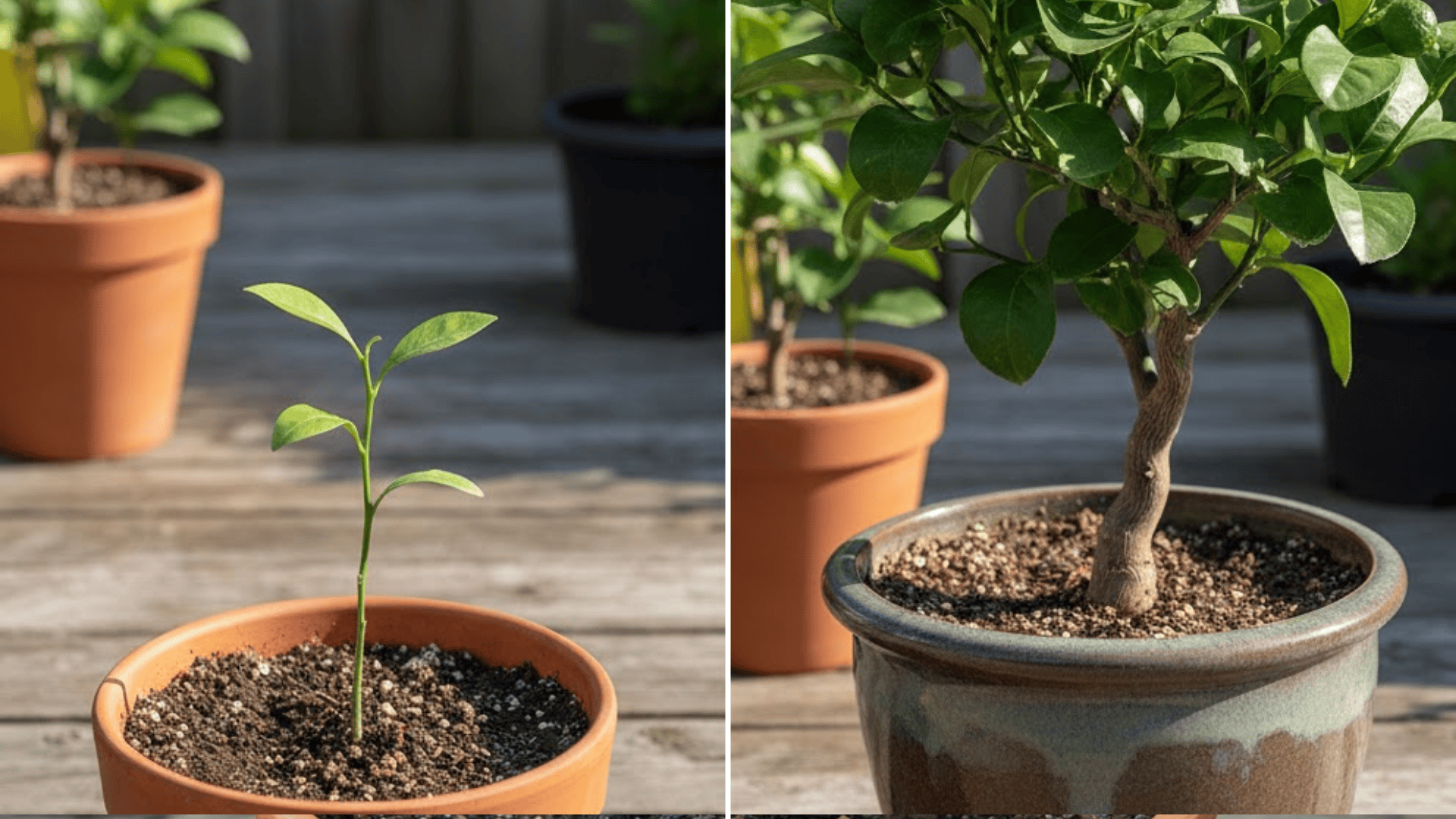
A lemon tree grown from seed can take seven to ten years to produce fruit. Some never fruit at all. Others do, but the lemons may not taste the same as the ones you started with. That’s not a failure. That’s just how seeds work.
A grafted lemon tree is different. It’s made by attaching a known fruiting branch to a strong root system. These trees usually produce fruit within two to three years. The flavor is predictable. The growth pattern is more reliable.
For beginners, grafted trees are the safer option if fruit is the goal. Seeds are better if you enjoy the process and don’t mind waiting or experimenting.
In short, seeds are about learning and patience. Grafted trees are about results.
Best Growing Options: Pick What Fits Your Space
Where your tree lives affects how much control you have. Neither option is better for everyone. It depends on space, climate, and how hands-on you want to be.
Growing a Lemon Tree in a Pot
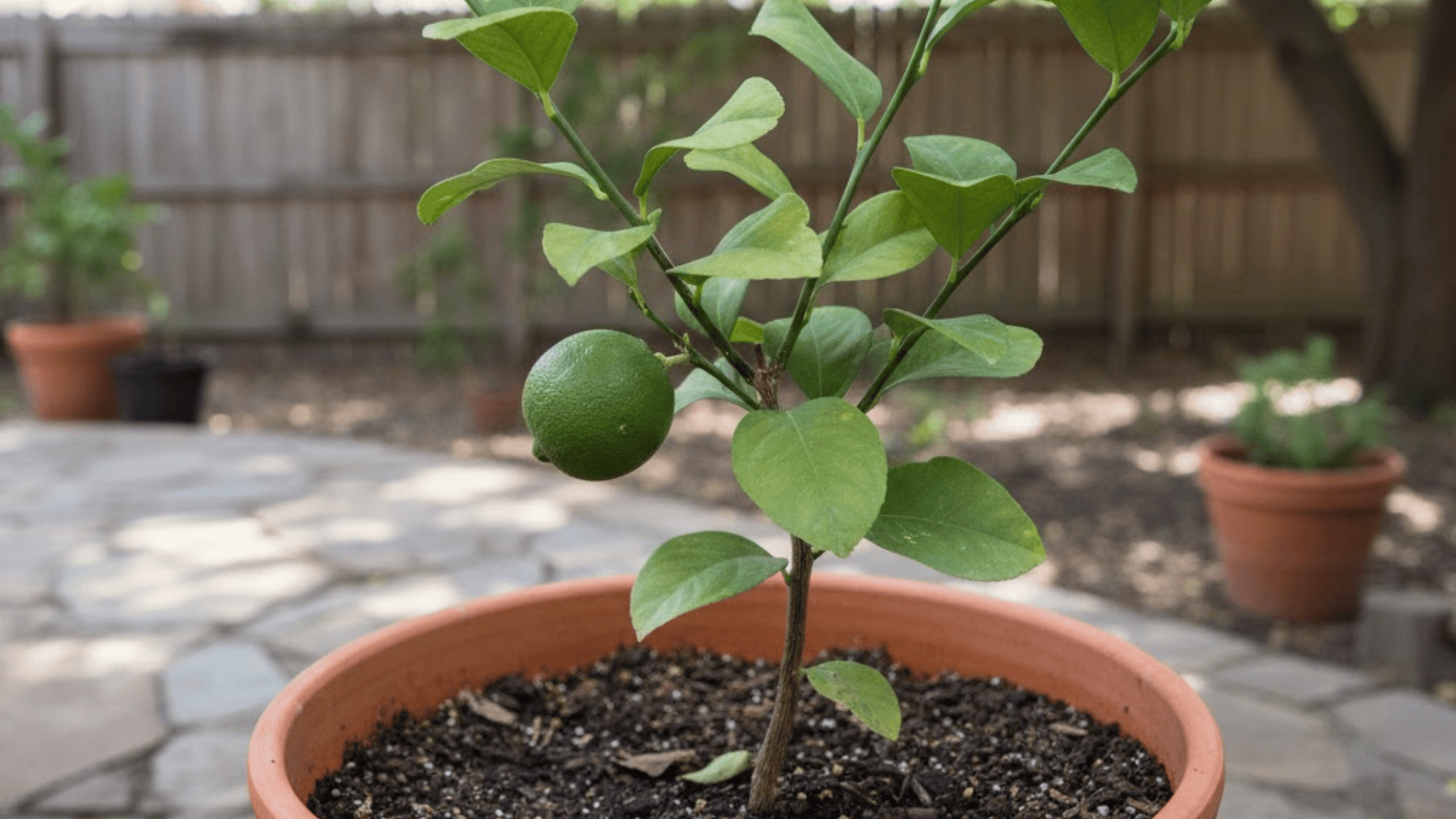
Pots give you control… that’s the biggest advantage. Young trees do well in smaller pots, usually around 12 inches wide.
As the tree grows, it needs more room. Most mature potted lemon trees end up in containers that hold 15 to 30 gallons of soil. Jumping straight to a huge pot often causes water problems, so gradual sizing matters.
Drainage is not optional. The pot must have holes. Lemon roots need air as much as they need water. Sitting in wet soil leads to root damage fast.
Potted trees can move. That helps in cold weather or extreme heat. The outdoors is usually better for growth. Indoors works if the light is strong and consistent.
Growing a Lemon Tree in the Ground
Planting in the ground works best in warm climates where frost is rare. Lemon trees don’t handle freezing temperatures well, especially when young.
Soil needs to drain well. Heavy clay holds water too long and suffocates roots. Mixing in sand or compost helps loosen the soil before planting.
Frost protection matters during the first few years. Covers, mulch, and planting near a warm wall can make a big difference. Once established, trees handle short cold snaps better, but they never like prolonged cold.
How to Grow a Lemon Tree From Seed
Growing from seed is slow, but it’s simple if you understand the timeline.
Step 1. Start with fresh seeds. Rinse off all pulp and plant them soon after removing them from the fruit. Dry seeds often fail to sprout.
Step 2. Plant seeds about one inch deep in moist, well-draining soil. Keep the soil damp, not soaked. Warmth helps. Most seeds sprout in two to three weeks, though some take longer.
Step 3. Once the seedling appears, light becomes the priority. Weak light causes thin stems and slow growth. Water only when the top layer of soil starts to dry.
Here’s the warning most guides skip. Seed-grown lemon trees take years to mature. During that time, they focus on roots and leaves, not fruit. That’s completely normal. Slow does not mean broken.
If you want to see this process play out over several months, this video shows each method and how the seedlings actually performed:
Lemon Tree Care Basics that Actually Matter
Most problems come from care routines that don’t match how the tree works.
1. Sunlight Requirements
Lemon trees need a lot of light. Six hours is the minimum. Eight to twelve hours is better.
Indoors, windows often don’t provide enough intensity, even if the room looks bright. That’s why indoor trees grow slowly or drop leaves. Supplemental grow lights help if natural light is limited.
Outdoors, full sun produces stronger growth and better leaf color. Sudden changes can shock the plant, so gradual transitions matter.
2. Watering without Killing the Roots
Lemon trees hate sitting in wet soil. Roots need oxygen. Overwatering pushes that oxygen out.
Water deeply, then let the soil dry slightly before watering again. Frequency depends on pot size, temperature, and season. There is no fixed schedule that works everywhere.
Signs of overwatering include yellow leaves, leaf drop, and soggy soil that never dries. These often look like underwatering, which leads people to add more water and make things worse.
3. Soil and Fertilizer
Soil should feel loose and crumbly, not dense. Good citrus soil drains fast but holds enough moisture to support roots.
Lemon trees need regular feeding once established. They use a lot of nutrients to support leaf growth. Yellowing between leaf veins often signals nutrient imbalance, not lack of water.
Fertilize during active growth periods. Skip feeding when growth slows. Pushing fertilizer during rest periods stresses the plant.
How Long It Takes for A Lemon Tree to Grow and Produce Fruit
This is where expectations usually break.
Seed-grown trees spend the first few years building structure. Leaves and branches come first. Fruit only appears once the tree is mature enough to support it.
Grafted trees move faster. Many flower within two years. Some even try earlier, but early flowers often drop as the tree focuses on growth.
Slow growth looks like steady leaf production without dramatic changes. That’s normal. Sudden spurts followed by pauses happen as the tree adjusts to seasons and light.
Common Lemon Tree Problems and Fixes
| Problem | Likely Fix |
|---|---|
| Yellow leaves | Check watering first. Let soil dry slightly between waterings. If watering is consistent, look at nutrients, especially nitrogen or iron. |
| Dropping leaves | Reduce stress. Avoid sudden light or temperature changes. Check for overwatering and improve drainage if soil stays wet. |
| No growth | Increase light exposure. Make sure roots aren’t cramped. Repot if the container is too small or roots are circling tightly. |
| No fruit | Be patient. Most trees are too young. Focus on healthy growth, steady light, and proper feeding instead of forcing blooms. |
Each symptom is the tree responding to its environment. Fixing the cause takes patience, not force.
Indoor Lemon Tree Growing Tips
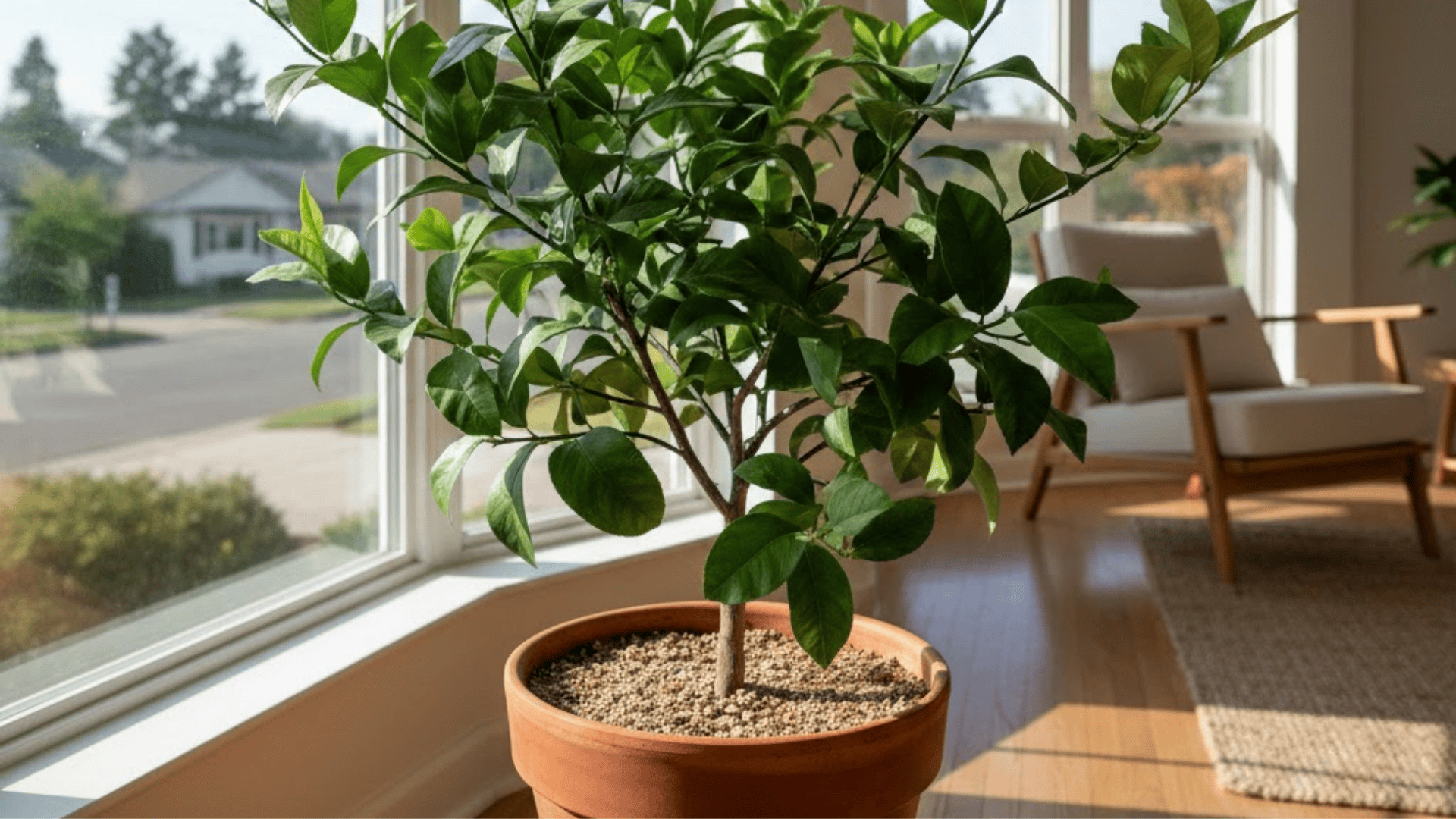
Indoor lemon trees depend more on controlled conditions than outdoor trees. Small adjustments make a big difference over time.
- Light must be strong and consistent, and grow lights are often necessary when window light is not enough.
- Temperature should remain stable, and the tree should be kept away from cold drafts and sudden changes.
- Humidity needs attention indoors because dry air pulls moisture from leaves and slows growth.
- Outdoor exposure helps improve strength and leaf color when weather conditions are safe.
- Gradual transitions are required when moving the tree between indoor and outdoor environments to prevent shock.
When these factors stay balanced, indoor lemon trees grow steadily instead of reacting to stress
Mistakes Most Beginners Make
These mistakes are common and usually come from good intentions. They happen when care is driven by rules instead of observation.
- Oversized pots early on: Large containers hold excess moisture. Young roots struggle in soil that stays wet too long.
- Scheduled watering: Watering by the calendar ignores soil conditions. Lemon trees respond better to touch and dryness than timing.
- Weak indoor light: Bright rooms still fall short. Without strong light, growth slows and leaves drop.
- Rushing fruit production: Young trees prioritize roots and leaves. Pushing for fruit too early stresses the plant.
When these mistakes happen, the tree shifts into survival mode. Correcting them restores balance, but it takes time and steady care.
Wrapping Up
Growing citrus is slower and quieter than most advice makes it sound. That’s not a flaw. It’s the nature of the plant.
Once you understand how light, water, roots, and time interact, a lot of confusion falls away. You stop reacting to every yellow leaf and start reading what the tree is telling you. That’s the real shift.
Learning how to grow a lemon tree isn’t about doing more. It’s about doing less, but doing it with intention and patience. When you give the tree what it needs and let it move at its own pace, progress becomes easier to see.
If you want to keep learning, explore the other guides on this site. They cover common questions, deeper care topics, and practical growing advice.