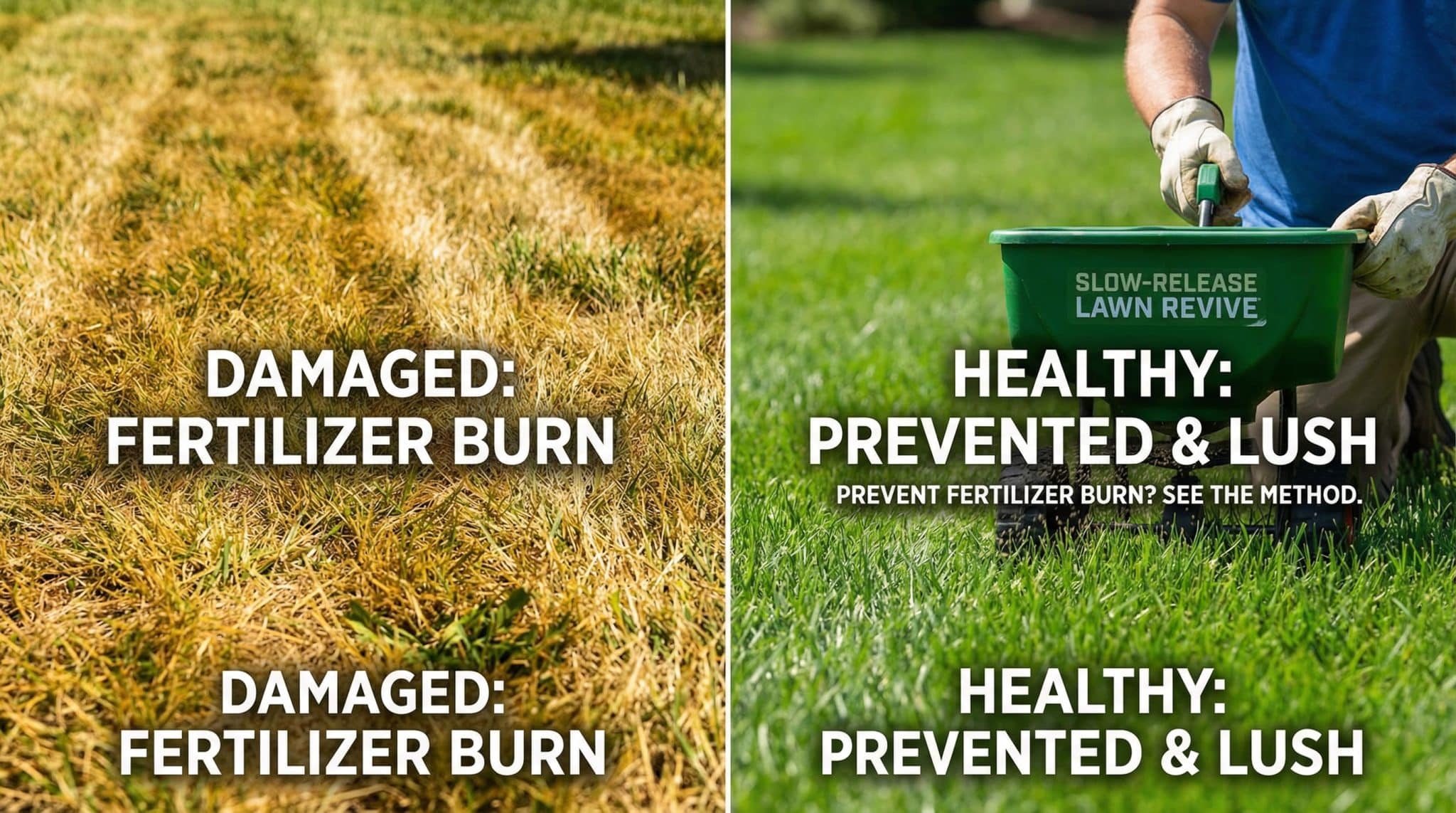
Slow Release Fertilizer: The “Stop Frying My Lawn” Button You Didn’t Know You Needed
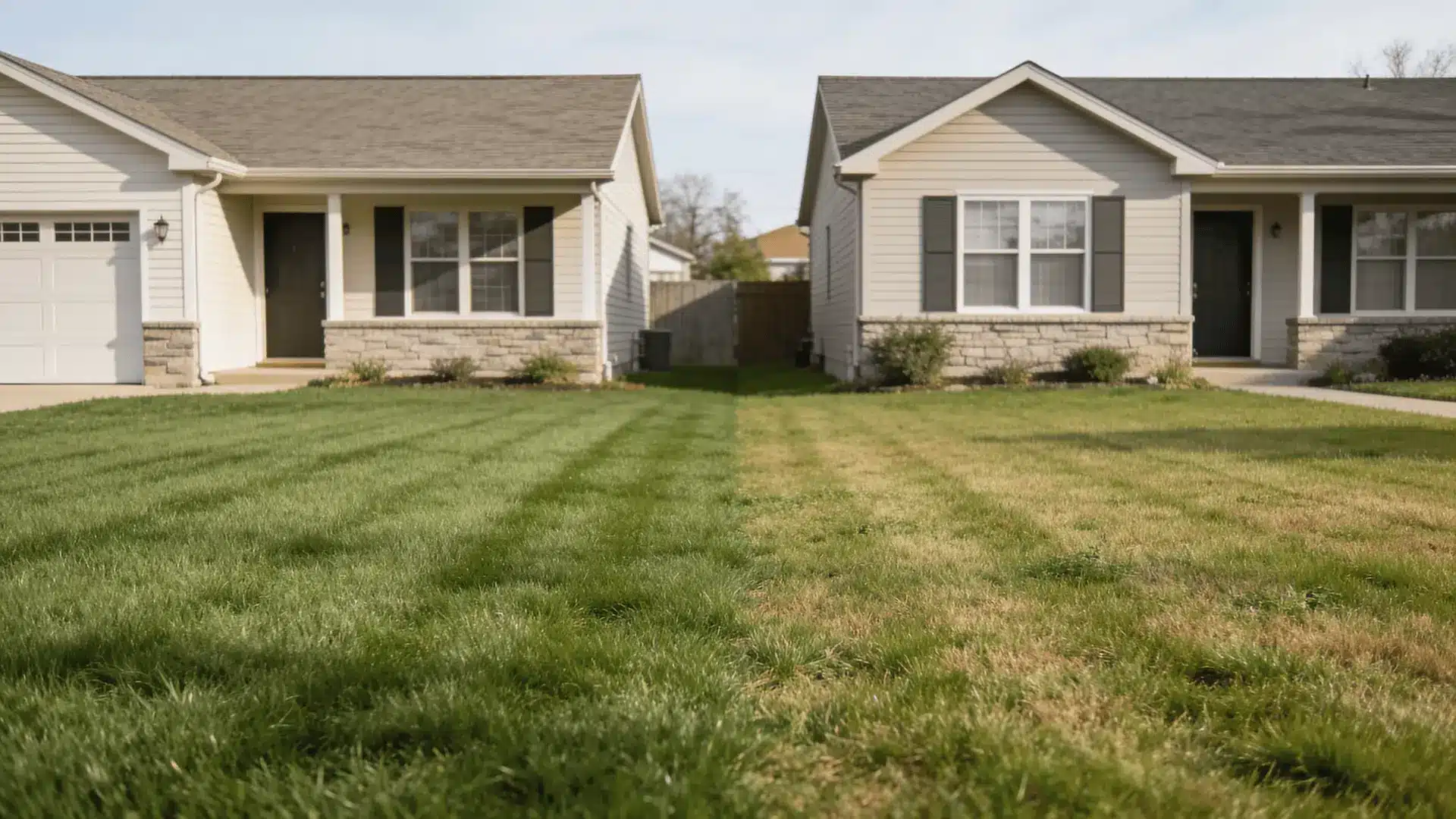
If you’ve ever fertilized your lawn and then watched it develop mysterious brown streaks like it’s auditioning for a sad zebra documentary… hi. You’re not alone.
Here’s the deal: most “fertilizer burn” isn’t your grass getting chemically melted. It’s basically getting dehydrated like it just ate a bag of pretzels and no one gave it water. Fertilizer raises the salt level in the soil water, and if that salt spike happens fast enough, moisture gets pulled out of the grass roots instead of into them. Your lawn looks drought stressed even when the soil feels kinda damp. Rude.
Slow release fertilizer is the easiest way to stop this drama before it starts because it feeds over weeks, not hours. More margin for error. Less lawn regret.
Let me walk you through the stuff that actually matters (without making this feel like you’re studying for the Bar Exam: Turf Edition).
Why Lawn Fertilizer “Burns” (and Why It’s Usually a User Error Situation)
When fertilizer dissolves, it makes the soil water saltier. A little? Fine. Too much too fast? Your grass basically panics and loses water through its roots. That’s the “burn.”
Fast release fertilizers dump a ton of nutrients quickly. Slow release spreads it out over 6-12 weeks, so the salt level doesn’t spike like a jump scare.
If you remember nothing else: fast release is espresso. slow release is cold brew.
Step 0: Figure Out What You Actually Bought
Before you start flinging pellets around your yard like chicken feed, look at the bag.
You’re looking for words like:
- Slow release
- Controlled release
- Polymer coated
If the vibe is “quick green up!” and it’s basically urea front and center with no mention of coating? That’s probably fast release.
Not saying fast release is evil. I’m saying it’s the option most likely to punish you for eyeballing.
The 3 Slow Release Types (So You Can Pick Without Spiraling)
You don’t need a PhD in fertilizer. You just need the quick personality test:
1) Polymer coated granules (my favorite for most people)
Each little granule has a coating that lets nutrients seep out gradually. Warmer soil = faster release, cooler soil = slower. It’s consistent and forgiving, which is what I want in a yard product because I’m not trying to live life on hard mode.
2) Organic slow release
These need soil microbes to break them down first. Translation: burn is rare, but it’s also not instant gratification. If your lawn is struggling and you’re hoping for a miracle by Friday? This isn’t that.
3) Stabilized nitrogen
These have inhibitors that slow down nitrogen conversion. They can be a nice option in summer when heat makes everything a little… extra.
My Opinionated Shopping Advice (AKA: Don’t Let the Bag Hype You Up)
A couple simple rules that save a lot of pain:
- Lower nitrogen percentages are generally safer. A 15 something something is easier to live with than a 30-0-4 if you’re new to this or prone to “just a little extra” thinking.
- Organic options are usually gentler (and great if you’re the type who’d rather underdo it than risk crisping the yard).
- If you truly need a fast correction (like a serious deficiency), fast release can help—but you have to measure carefully and water immediately. This is not the moment for vibes.
(Also: if you’re fertilizing container plants, ignore most lawn advice. Get a product labeled for pots with a 3-4 month release and start low. Containers are tiny ecosystems and they will absolutely revolt if you overfeed them.)
How to Apply Fertilizer Without Creating “Racing Stripes of Shame”
Slow release helps, yes. But technique is where people accidentally set their lawn on fire (figuratively… mostly).
1) Don’t Guess Your Lawn Size
I know. Measuring is annoying. But guessing is how you end up spreading fertilizer like you’re salting a driveway in an ice storm.
- Measure your lawn’s square footage (length x width ish, subtract beds/driveway).
- Check the label for the rate per 1,000 sq ft.
- Do the math and load that amount.
Example: 5,000 sq ft lawn, label says 4 lbs per 1,000 sq ft → you need 20 lbs total.
2) Use Your Spreader Like You’re Not Mad at It
This is where the “striping” happens.
- Do the perimeter first, then go back and do straight parallel passes.
- Close the hopper when you stop. Every time. Stopping with it open dumps a pile in one spot and creates those dead circles that make you question your entire adulthood.
- Avoid overlap. A tiny gap is safer than doubling up.
If you tend to wander while you walk (same), focus on a steady pace. Fertilizer doesn’t care that your neighbor waved.
3) Water Within 24 Hours (Non-Negotiable)
If you do nothing else, do this.
Watering:
- washes granules off the blades (so they don’t sit there and scorch),
- starts the slow release process,
- dilutes salts at the surface.
You want about 1 inch of water across the lawn. If you can still see granules sitting on the grass later, water again.
And yes, even slow release can burn if you skip watering. It’s not magic. It’s just nicer.
Timing: When to Fertilize (and When to Sit on Your Hands)
Slow release works best when the lawn is actually growing—aka when the soil is warm enough.
- Cool season grasses (fescue, bluegrass, rye): shoot for soil temps around 55-65°F (often spring/fall).
- Warm season grasses (Bermuda, Zoysia, St. Augustine): wait for 65-75°F (late spring/early summer).
If you want to be a nerd in the best way: stick a thermometer about 4 inches down in the morning and see what you get. (This is the least dramatic lawn tool purchase you’ll ever make, but it’s oddly empowering.)
My personal “hard stop”: if highs are pushing 85°F+ and the lawn is stressed, I skip fertilizing. Heat + fertilizer is how you end up crying into the hose.
Also skip if:
- the lawn is drought stressed or diseased,
- the soil is bone dry,
- it’s brand new grass (give seedlings 4-6 weeks—baby roots are delicate and dramatic).
Uh Oh: How to Tell If You Burned It (and What to Do Fast)
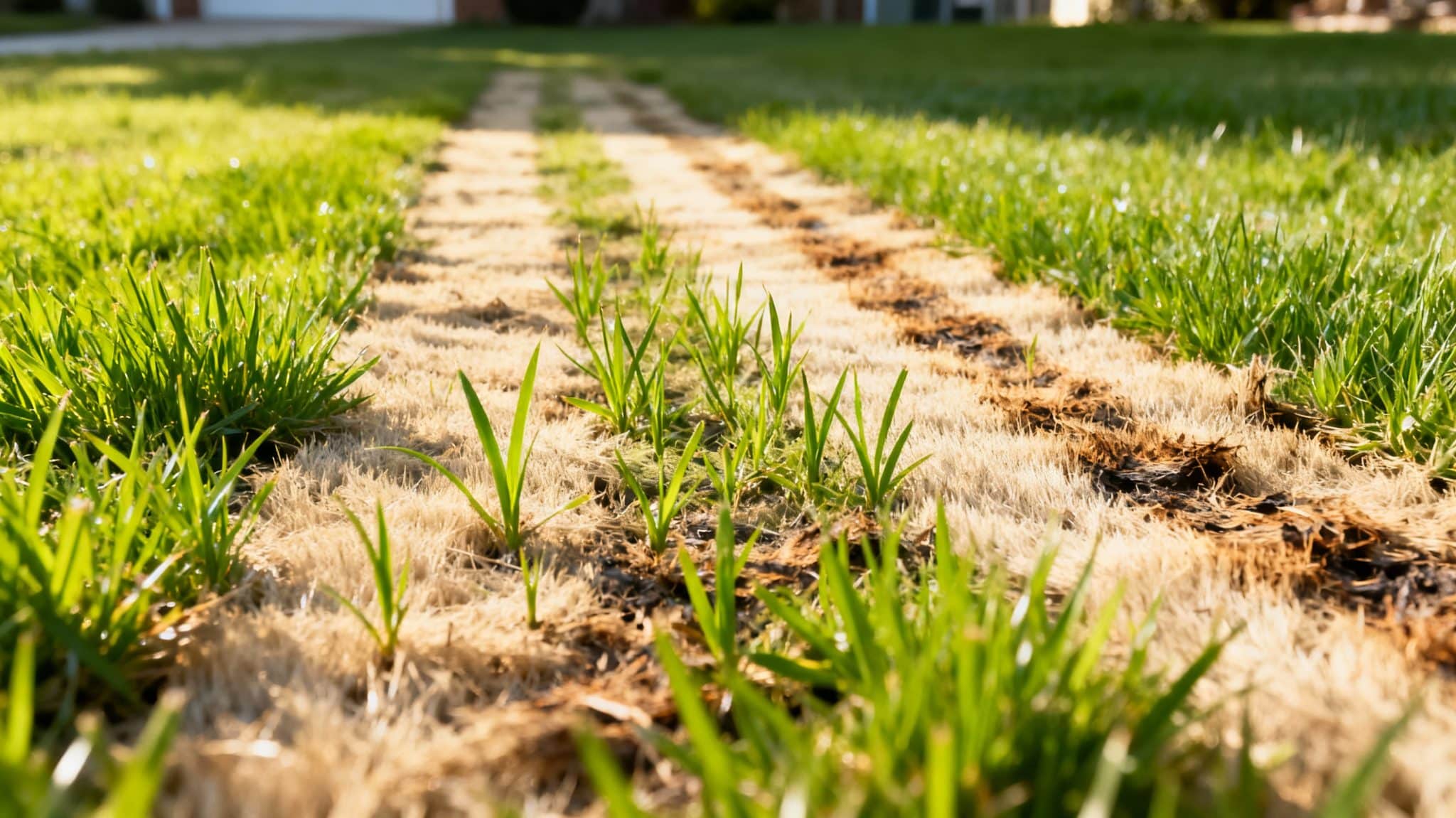
Fertilizer burn or pet urine lawn damage usually looks like:
- yellow or brown patches that feel crispy,
- streaks that match your spreader pattern (hello, overlap).
The crown test (quick and helpful):
Gently tug the grass.
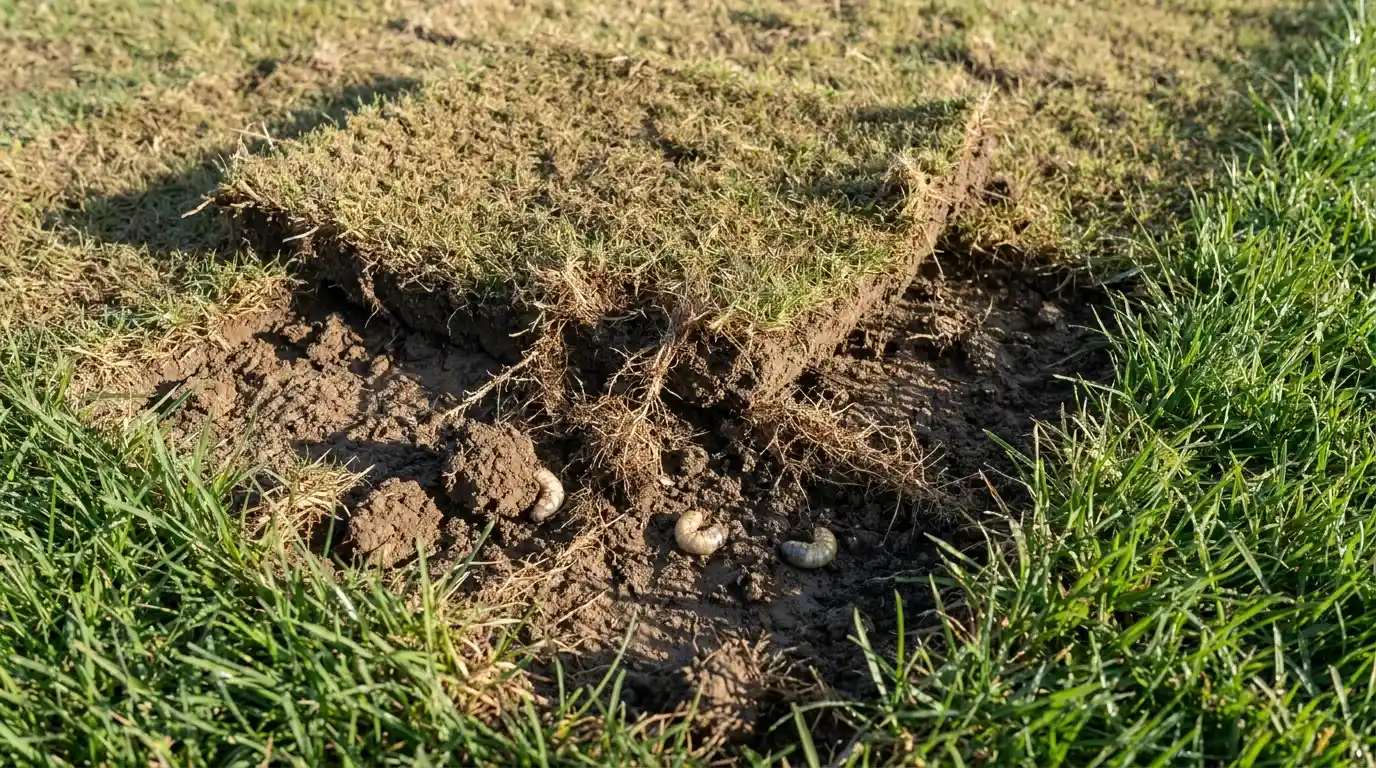
- If it pulls out super easily and there’s no firm, light colored tissue at the base, the crown is dead. That spot will need reseeding.
- If it resists and you see some healthy tissue, recovery is possible.
What I do immediately for signs of too much fertilizer:
- Stop fertilizing. Obviously.
- Water heavily to flush salts down below the root zone (think 1-2 inches daily for several days).
- Don’t rake it to death. Let it recover without extra trauma.
Light yellowing can bounce back in a week or two with consistent watering. Brown patches with living crowns can take a few weeks. Dead crowns? You’ll be reseeding, and it’s usually smartest to wait a bit (often 4-6 weeks) before trying again—otherwise you’re just stressing everything out twice.
The Quick “Don’t Burn It” Checklist (Tape This to Your Brain)
Before you fertilize:
- Know what product you’re using (fast vs slow release).
- Measure your lawn. Do the math. Load the correct amount.
- Don’t overlap with the spreader (and close the hopper when you stop).
- Water within 24 hours.
- Don’t fertilize in extreme heat or when the lawn is stressed.
Slow release fertilizer won’t fix every lawn problem, but it’s the closest thing I’ve found to a “grown up safeguard” for people who want a nicer yard without turning it into a full time hobby.
If you do one small thing this week: grab a cheap soil thermometer and check temps before your next application. It’s a tiny step that prevents a whole lot of crispy regret.