Dealing with squirrels can feel like you’re running the same loop every season. They dig, they stash food, they grab whatever ripens first, and the whole garden starts to look like a project you never signed up for.
When people search how to keep squirrels out of garden spaces, they’re usually hoping for one trick that fixes everything, but in my experience, it never works that way.
What does work is understanding why squirrels target certain spots and knowing how to shut those patterns down before they start.
This guide walks through the real fixes, fast wins, and the setups that hold up long-term.
Why Squirrels Keep Coming Into Your Garden
Squirrels aren’t showing up by accident. They come in because your garden gives them a few things they’re always looking for.
Food is the big one. If you’ve got tomatoes, berries, fresh sprouts, or even a couple of fallen fruits on the ground, they lock onto that fast. They’re always hunting for quick calories, and gardens make that easy.
The digging is its own behavior. They’re not digging because they hate your plants. They’re using your soil the way they use the whole neighborhood; as a storage spot.
Loose garden beds help them bury nuts in the fall, and then in the spring they come back and dig everything up again. That’s usually when seedlings get pulled out like it’s nothing.
The pattern shifts through the year. Fall is about burying food. Spring is about finding it.
Once you understand that cycle, what pulls them in and why they’re tearing through the soil, you can set things up so they stop treating your garden like their personal pantry.
Fastest Ways to Get Squirrels Out Today
If you want something that works right now, these are the moves that usually slow squirrels down fast. They’re simple, you can do them with things you probably already have, and you don’t need to rebuild your whole garden to get a little relief.
- Coffee grounds: Just sprinkle them around the soil. Squirrels don’t like the smell, and it takes the fun out of digging in that spot. It’s not perfect, but it helps right away.
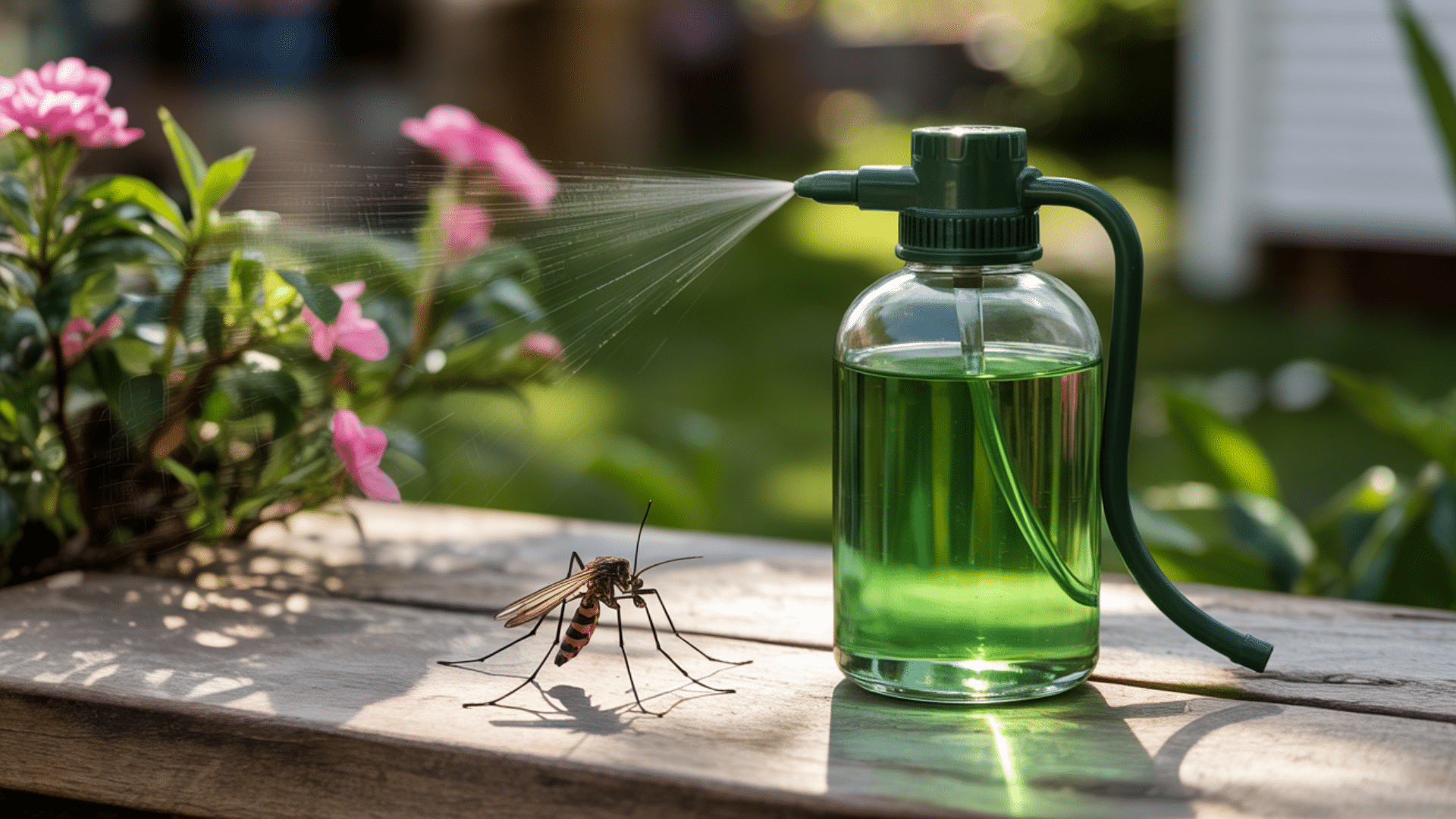
- Peppermint oil spray: A few drops of peppermint oil mixed with water and a little dish soap goes a long way. Spray it on the soil and around the bed. The smell hits them hard, and most won’t stick around.
- Cayenne pepper: Shake a light layer over the soil or around the plants. They’ll sniff it once and back off. You’ll need to reapply after rain, but it works fast.
- Irish Spring soap: Shave off a few chunks and spread them around the area. The scent is strong enough to push squirrels away for a bit. It’s an easy short-term fix.
- Remove fallen fruit or food: Pick up anything that drops. Tomatoes, berries, nuts… all of it. If you take away the snacks, they lose interest a lot quicker.
These quick steps won’t solve the whole problem, but they buy you time. They calm things down while you set up longer-lasting solutions.
The 4-Part System that Keeps Squirrels out For Good
Squirrels adjust fast. If you want a garden they stop messing with, you need a simple system that covers more than one angle. When you stack the right methods together, that’s when things actually hold up.
1. Block Them Physically (Most Reliable Fix)
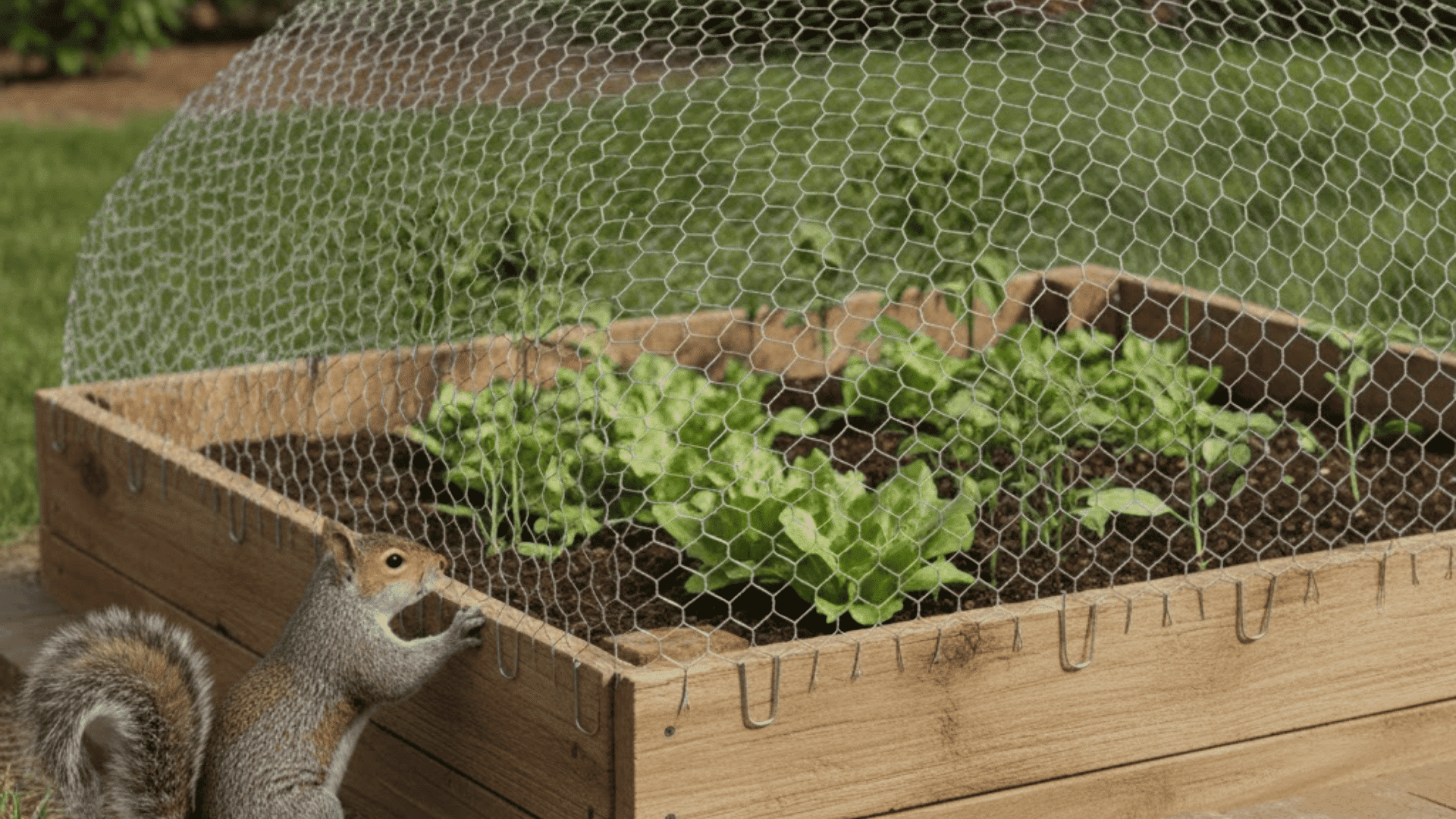
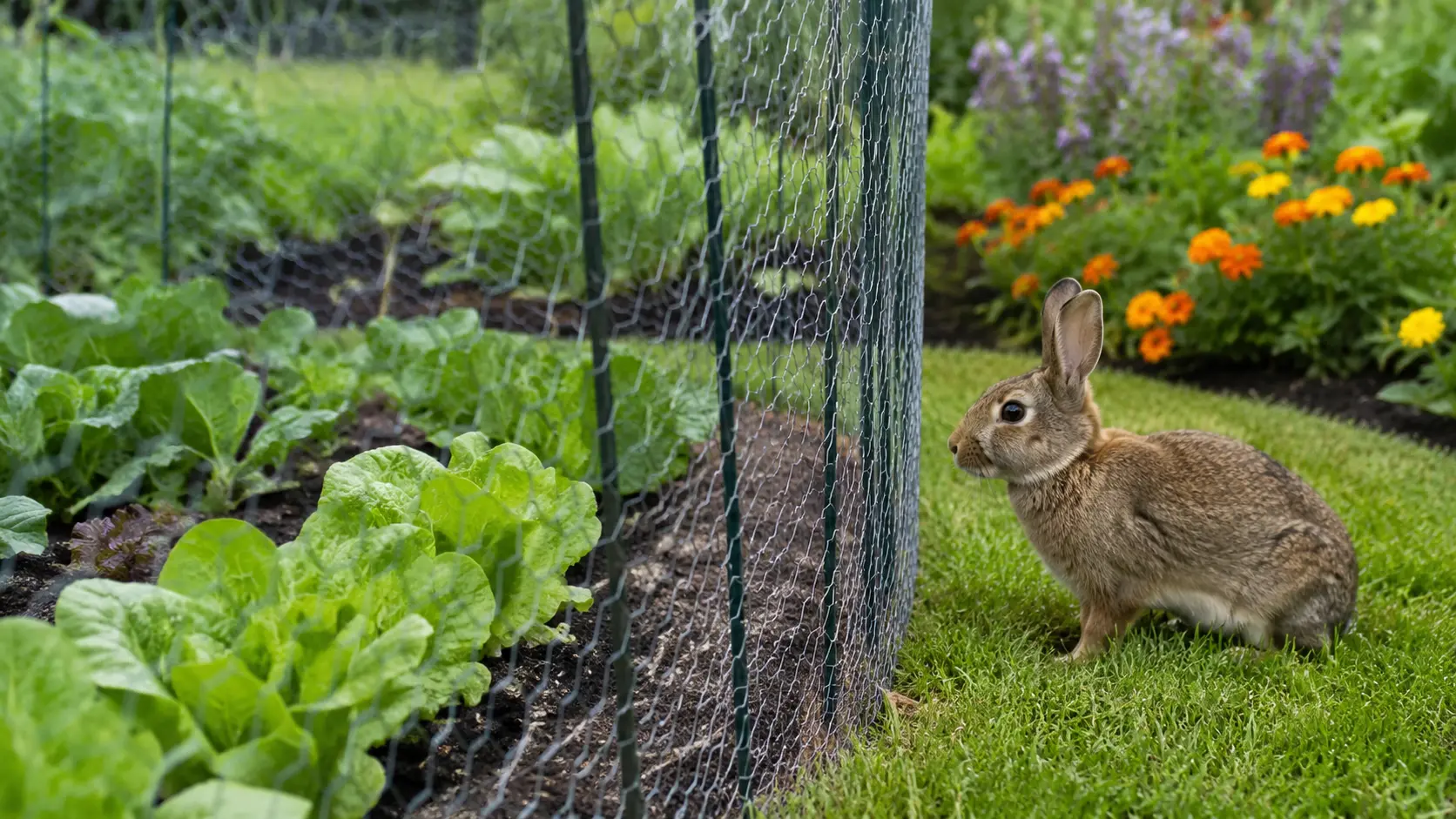
Barriers work better than anything else because they take the choice away. A squirrel can’t chew through a good wire mesh. It can’t squeeze past a tight cover. And once they can’t get in, they usually move on and look for an easier spot.
Here’s what actually works when you want to physically shut them out:
Chicken wire: Use it over beds or around young plants. Secure the edges with stakes or bricks so they can’t crawl under it. If it’s loose anywhere, they’ll find that gap.
Netting for raised beds: Stretch bird or garden netting over hoops. Bring the edges down past the top of the bed so they can’t sneak in from the sides. This keeps them off fruit, sprouts, and anything tender.
Mesh lids for containers: For potted plants, a simple mesh lid does the job. You set it on top, let the plant grow through the center opening, and the squirrel loses its digging spot.
Garden cloth for seasonal beds: Light garden fabric works well in early spring or fall. It keeps them from tearing up the soil when they’re burying or digging up their food.
Rock borders: A thick row of rocks around a bed gives them one more obstacle. It won’t stop a determined squirrel, but it slows them down enough to work with everything else you’re using.
Hardware cloth buried around beds: If you’ve got a big digging problem, bury hardware cloth a few inches down around the edges. Squirrels hit the metal and stop instantly. It’s one of the best long-term fixes.
2. Repel Them with Smells They Hate
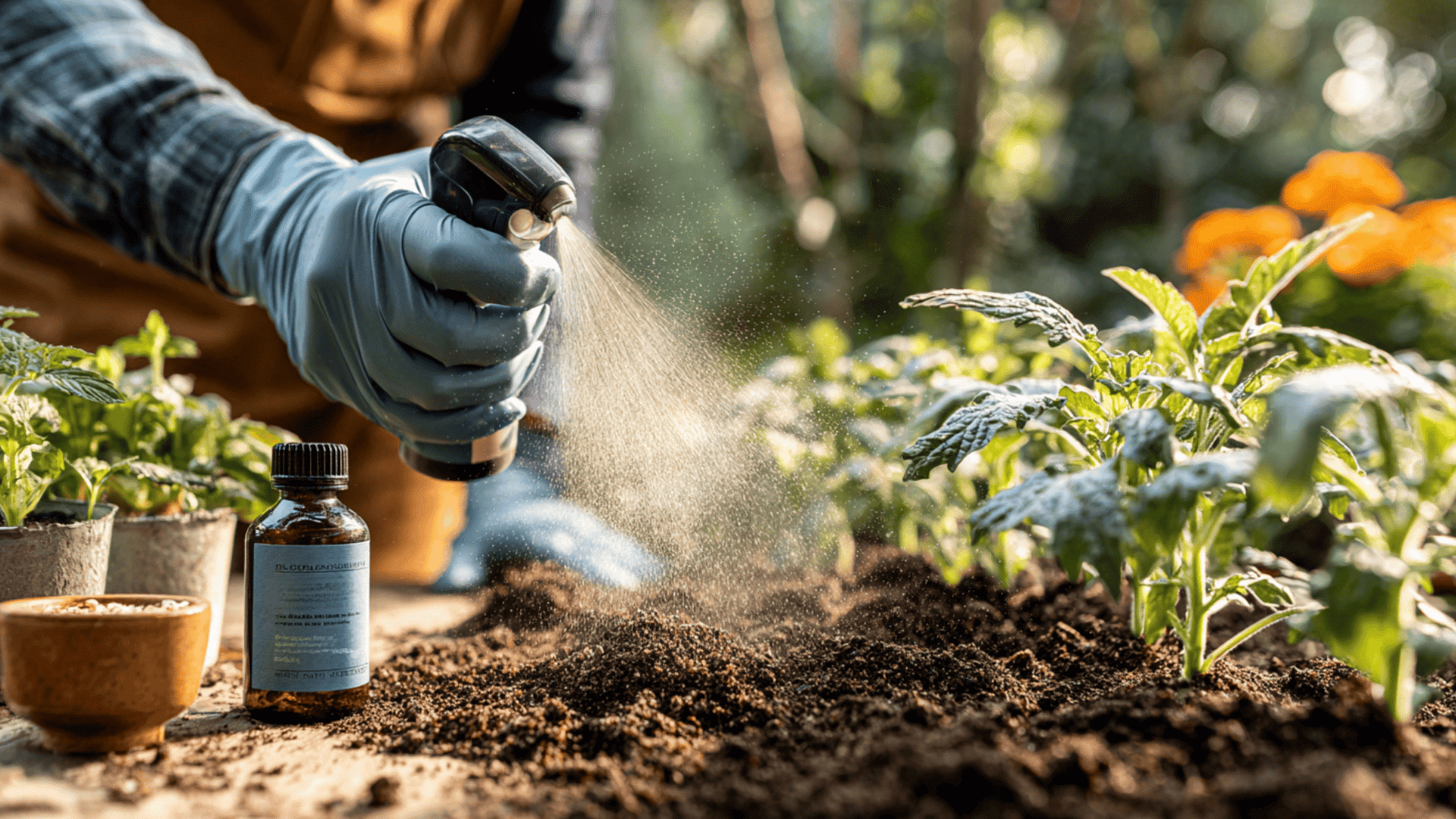
Squirrels rely on smell more than anything. If something hits their nose the wrong way, they back off fast.
That’s why scent-based repellents work well as part of a system. None of these are perfect on their own, but they make your garden a lot less inviting.
Hot pepper spray: Mix water, hot pepper flakes or cayenne, a little garlic, and a drop of dish soap. Let it steep, strain it, and spray it on the soil and around the plants. Reapply after rain or every few days. The smell and the heat push them away.
Peppermint oil spray: A few drops of peppermint oil mixed with water and dish soap creates a scent they avoid. Spray it around the area, especially near the spots they keep visiting.
Garlic spray: Blend garlic with water, strain it, and spray that mix around the bed. It’s simple, and the smell alone is usually enough to keep them from hanging around.
Coffee grounds: Spread them over the soil. The smell throws squirrels off, and the texture takes away some of the digging appeal.
Predator urine granules: These come in garden-safe pellets that mimic natural predators. Use them around the perimeter of the bed. You don’t need much. Refresh it every couple of weeks.
Squirrel-repelling plants: Plants like mint, marigolds, daffodils, onions, and nasturtiums help when you use them the right way. Don’t just tuck one mint plant in the corner. Make a border. Fill the edges. The scent works better when it surrounds the area you want to protect.
3. Scare Them Away with Movement & Noise
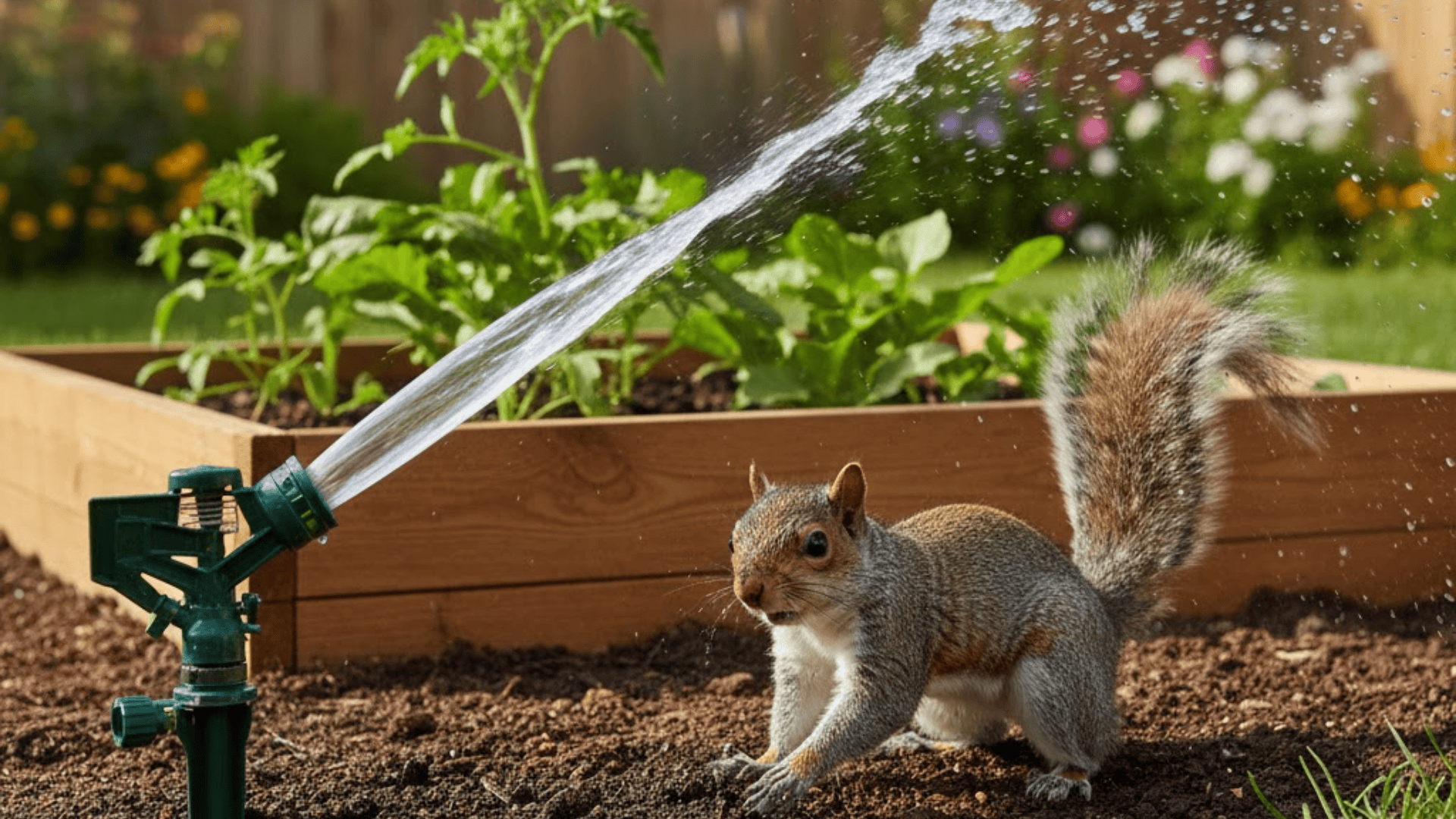
Squirrels hate surprises. Anything that moves suddenly or makes noise can push them off your garden long enough for your other methods to work.
Motion-activated sprinklers: When a squirrel walks into the detection zone, the sprinkler fires a quick burst of water. It doesn’t hurt them, but it startles them enough to make the area feel unsafe.
Reflective CDs or foil: Hang them so they spin in the wind. The flashes of light catch a squirrel off guard and make them think something is shifting around the garden.
Pinwheels: Same idea as the reflective objects. The movement alone is enough to make squirrels hesitate before coming closer.
Predator decoys: Owls, hawks, and snake decoys can work, but only for a short time. Squirrels figure out what’s real and what’s not.
Pro tip: rotate the decoys. Move them every few days. Change the angle. Change the position. If they look like they’re “alive” in the space, they stay effective much longer.
These movement and noise tools work best when combined with barriers or repellents. They don’t keep squirrels out forever, but they make your garden a place they don’t fully trust, and that’s a win.
4. Remove All Temptations
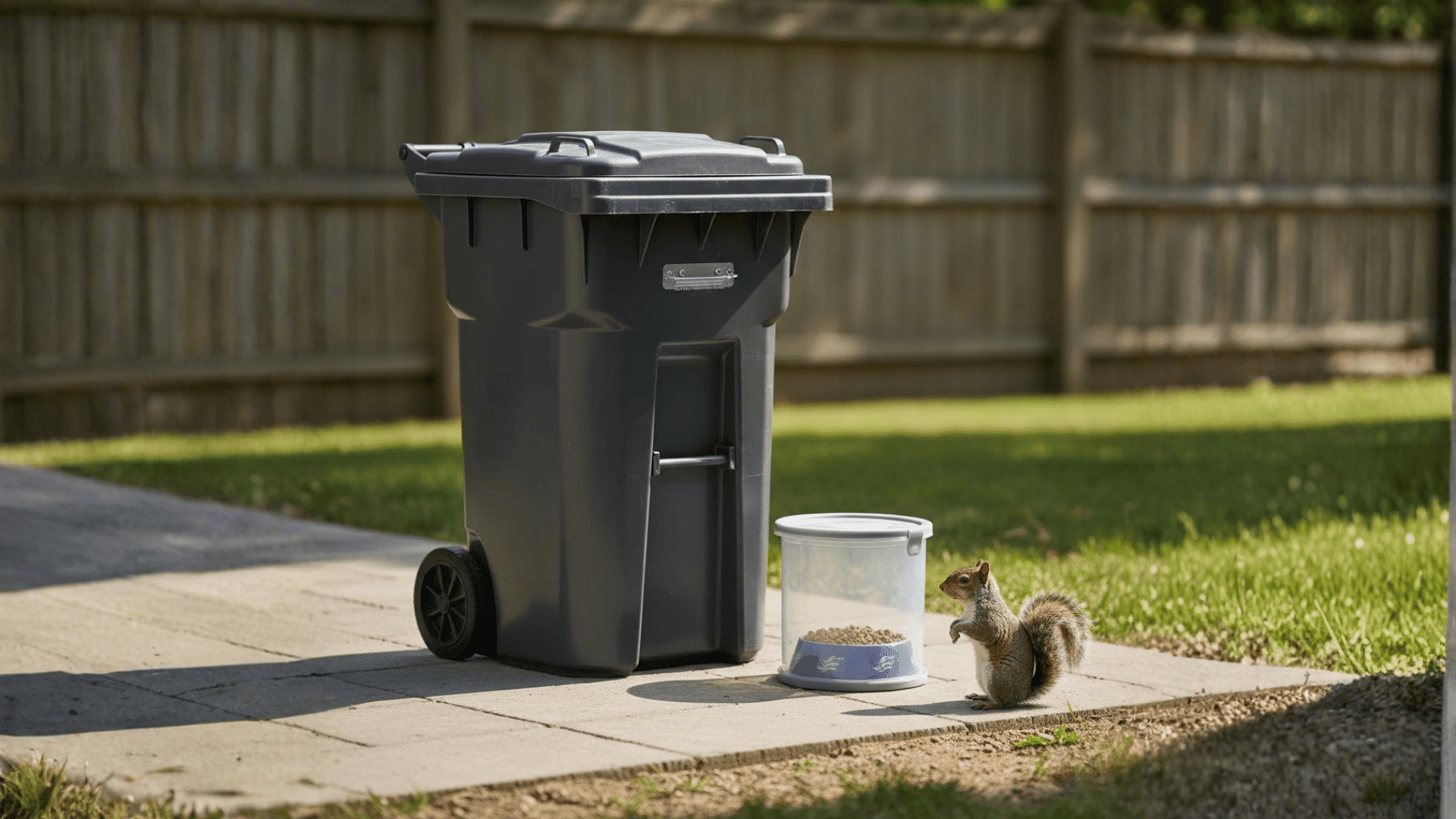
A big part of keeping squirrels out is taking away the easy rewards. If there’s nothing to grab, nothing to sniff out, and nothing worth digging for, they lose interest fast.
Harvest earlier: If something’s ripe, pick it. Squirrels don’t wait. They’ll grab tomatoes, berries, and anything sweet the moment you’re not looking.
Clean fallen fruit: Don’t leave anything on the ground. One dropped tomato or a couple of berries is enough to bring squirrels back over and over.
Bird feeders: Use a true squirrel-proof feeder, or take the feeder down for a bit. Regular feeders spill seeds, and that spillage pulls squirrels straight into the yard.
Secure trash and pet food: Close the lids tight. Keep bags inside bins. Don’t leave pet food bowls out. Any loose food becomes a signal that there’s more to find nearby.
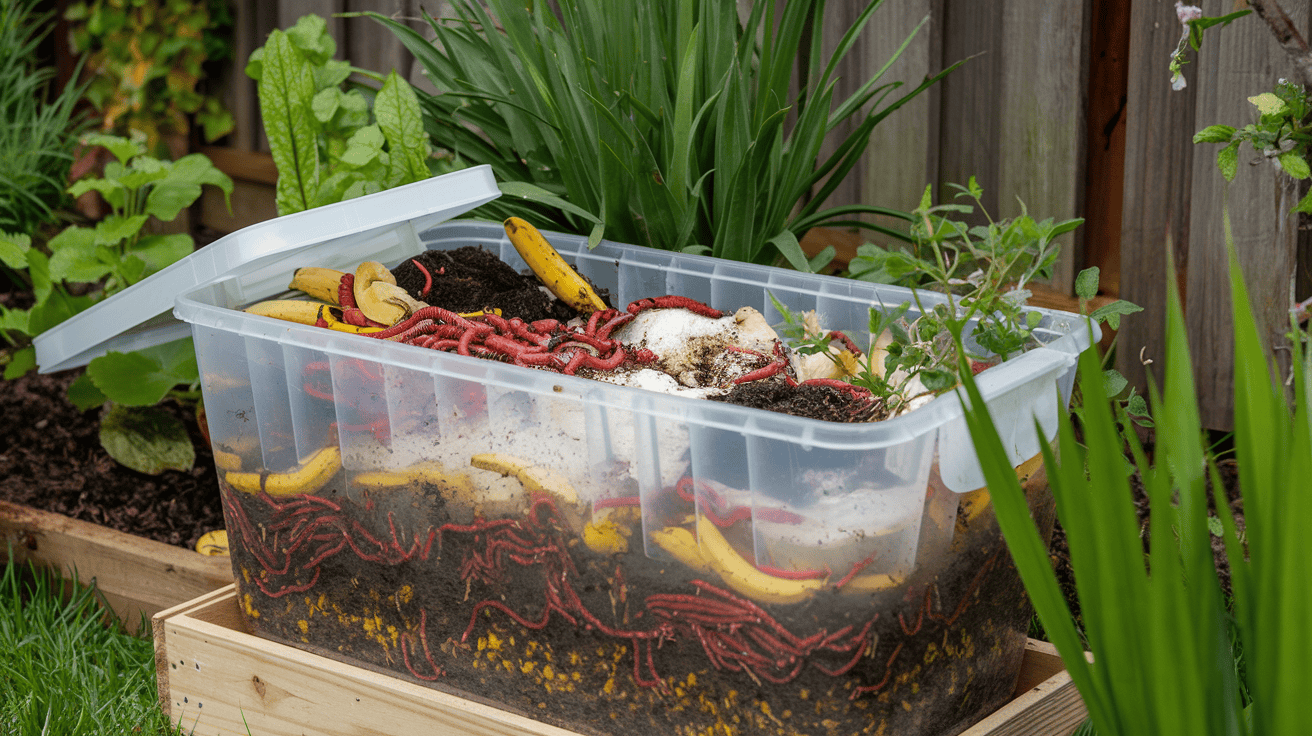
Protect compost bins: Make sure the lid locks or add weight on top. If the bin has air holes, use mesh to keep squirrels from pulling scraps out.
Taking away the easy food sources doesn’t remove them completely, but it stops your garden from becoming the first place they check.
Handling Squirrels in Raised Beds, Pots, and Flower Beds
Different setups attract squirrels for different reasons, so the fixes change depending on where the plants are sitting. Here’s how to handle each one:
Raised Garden Beds
Squirrels love raised beds because the soil is loose and the whole thing is easy to jump into. The best way to shut that down is to make the bed annoying to access.
Start with hoops and netting . Once the netting drops past the sides, squirrels usually don’t even bother trying to slip under it.
If digging is the main problem, hardware cloth under the soil is the real fix. They hit the metal layer and stop. It’s simple and it works.
Rock borders make things even harder for them. It’s not a total barrier, but it slows them down, and slowing them down buys you time.
And if they’re still testing your setup, motion sprinklers handle the rest. One quick spray is enough to make them look elsewhere.
Potted Plants on Decks
Deck pots get hit because they’re right in a squirrel’s path. The soil is loose, the pot is small, and the whole thing feels like a perfect digging spot.
A quick way to break that habit is coffee grounds . Drop a layer on the soil and it changes the scent enough to keep them out.
If they’re still trying to dig, switch to mesh covers . A cut piece of wire mesh over the top takes away the access point completely.
You can also lean on peppermint or pepper sprays here. Decks hold scent better than open garden beds, so these sprays actually stick around.
And here’s one people forget: move the pots back from railings . When the pot isn’t sitting right on their walking path, the problem usually drops off fast.
Flower Beds & Bulbs
Flower beds pull squirrels in hard during fall and spring. Bulbs are the main target because they’re easy to find and easy to dig up.
The best defense is to plant bulbs inside wire cages . You bury the whole setup, and the plants still grow through just fine.
A thick layer of mulch helps too. It adds resistance and makes the bed less appealing for digging.
If the problem feels constant, sprinkle a little blood meal around. The smell gives off a predator vibe and keeps squirrels out without affecting the plants.
When cold weather hits, give young beds a bit of winter protection . A simple layer of garden fabric stops late-season digging when squirrels are in stash mode.
Troubleshooting When Nothing Seems to Work
Sometimes you do everything right and squirrels still push through it. When that happens, it helps to look at the exact problem and match it with a direct fix. Here’s a quick breakdown to make that easier:
| Problem | What You Can Do |
|---|---|
| They chew through mesh | Switch to hardware cloth with smaller openings and thicker wire. Tighten all edges so they can’t get leverage. |
| They keep digging even with repellents | Rotate scents. Move from pepper to peppermint to garlic so they never adapt to one smell. |
| Repellents wash off in the rain | Use physical barriers during wet stretches: netting, mesh covers, hoops, or rock borders. Bring sprays back once the weather settles. |
| They act unusually bold or aggressive | Make the space uncomfortable: motion sprinklers, reflective objects, or predator decoys. Move the decoys every few days so they stay effective. |
When you’re stuck, the real key is rotation. Change what you use and where you place it. Squirrels are smart, but they don’t handle unpredictability well, and that’s usually what finally turns things around.
Safe vs. Unsafe Methods (Pets, Kids, Local Wildlife)
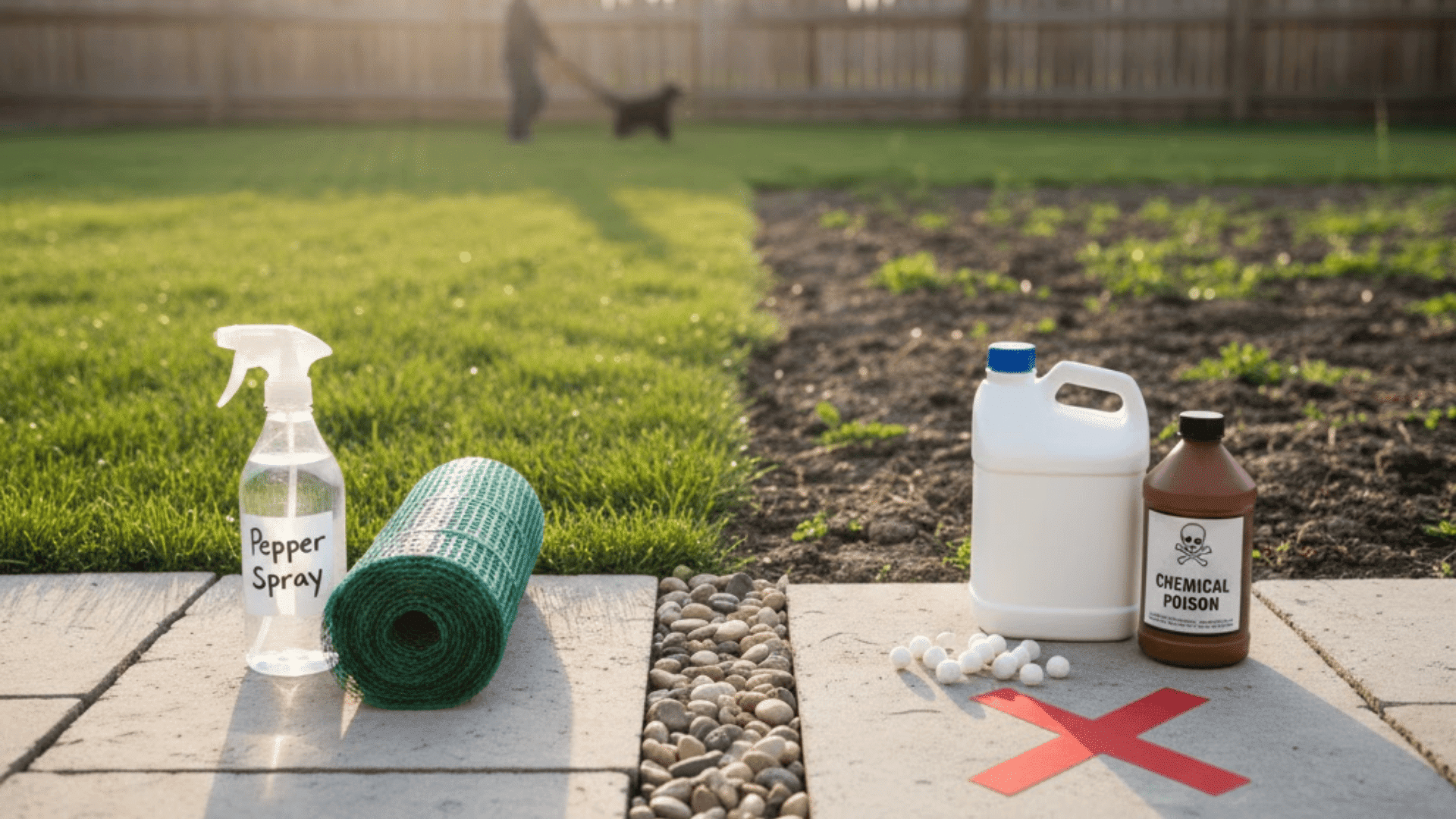
It’s easy to reach for whatever looks like it might work, but not every method is safe to use. Some things help, some things do real damage, and some tricks you see online should never be used in a garden at all.
Here’s what to keep in mind:
1. Pepper Spray Safety
Pepper spray works, but you have to use it the right way. Keep it on the soil or on the edges of beds, not on the leaves pets might nibble. Reapply carefully so it doesn’t spray back into your eyes or drift into play areas. It’s safe when used with control.
2. Why Bleach-On-Rags is Not Ideal
Bleach gets mentioned a lot, but it doesn’t belong in a garden. The fumes are harsh, it damages soil biology, and it’s unsafe for pets. It’s also not a long-term squirrel deterrent, so you get all the downside with very little payoff.
3. What Not to Use Around Pets
Anything that’s toxic on contact or in small amounts should be skipped. Mothballs, harsh chemicals, and poisons are a bad idea. Dogs especially will sniff or chew anything new in the yard, and those products can hospitalize them fast.
4. Why Trapping is Often Illegal
Most places have rules around trapping squirrels. They’re classified as wildlife, and relocating them without a permit is illegal in many states. Even when it’s technically allowed, the stress of relocation often kills the animal. It solves nothing and can create legal trouble.
The safest approach is simple… use physical barriers, mild repellents, and scare tactics. They do the job without putting anyone at risk; you, your pets, or the rest of your yard.
Myths vs. Reality (What Doesn’t Work Long-Term)
A lot of tricks get passed around, but some of them only work for a few days, and some never really work at all. Here’s a quick look at the common myths and what actually happens when you try them:
| Myth | Reality |
|---|---|
| Fake Owls | They work for a short time, but squirrels catch on fast unless you rotate the decoy often. |
| Untreated Mulch | Regular mulch doesn’t stop digging. It’s easy for squirrels to move and doesn’t slow them down. |
| Pie Tins | The spinning and noise help briefly, but squirrels usually ignore them after a few days. |
| Single-Method Solutions | Using just one tactic almost never holds up. Squirrels adapt quickly and push right through it. |
Seasonal Squirrel Control Plan
Squirrels change their behavior through the year, so the way you protect your garden needs to shift with it. Here’s what to focus on each season:
Spring: Protecting Sprouts
This is peak digging season. Squirrels are trying to recover anything they buried in the fall, and young sprouts get pulled out by accident. Use mesh covers, light netting, or hardware cloth to keep them off new growth.
Summer: Protecting Fruiting Plants
Tomatoes, berries, peaches, and other ripe produce pull squirrels in fast. Harvest earlier, clean up fallen fruit, and use netting or motion sprinklers to protect anything that’s close to ripening.
Fall: Acorn Season Digging
Fall turns your garden into a stash spot. This is when squirrels bury everything they can. Thicker mulch, hardware cloth edges, and garden fabric keep them from turning your beds into storage.
Winter: Bulb Protection
Squirrels dig up bulbs when the soil stays soft enough to work through. Wire cages, hardware cloth over beds, and light fabric barriers help keep bulbs in place until the ground freezes.
If you follow the rhythm of what squirrels are doing each season, your defenses stay one step ahead instead of constantly reacting.
Wrapping Up
Keeping squirrels out isn’t about chasing them away once. It’s about setting up your garden so it stops pulling them in.
When you understand how they move, what they look for, and how that changes season to season, you get a clear picture of what actually works.
And the good news is, the system doesn’t need to be complicated. A mix of barriers, scent-based deterrents, cleanup habits, and seasonal adjustments goes a long way.
When you put those pieces together, handling how to keep squirrels out of garden spaces becomes manageable instead of stressful.
For more straight-forward garden tips, head over to the other articles. They’ll keep you moving in the right direction.